

Dyslexia assessment and treatment in Campo de Gibraltar
When reading, writing or studying requires disproportionate effort, simply being told to “practise more” is rarely enough. At Ocnos Psychology Clinic, we assess what may be happening and develop an individualised plan for children, teenagers and adults, considering reading, learning, emotional wellbeing and everyday needs together.
Dyslexia is not a lack of intelligence, interest or effort
Dyslexia is a persistent learning difficulty that particularly affects reading and the development of fluent, automatic skills linked to written language. It may involve slow reading, difficulty decoding unfamiliar words, persistent spelling problems, fatigue with written tasks or needing to reread text several times to understand it.
Someone can have strong reasoning skills, curiosity, creativity or broad knowledge and still need considerably more effort to read and write. This is why explanations such as “they do not concentrate”, “they are lazy” or “they just need to read more” can be both inaccurate and unhelpful.
At Ocnos, we approach these difficulties within our neuropsychology and psychological assessment services, considering academic skills alongside the emotional impact that repeated difficulty, comparison or frustration may have had on confidence and motivation.
A useful assessment is not about assigning a label as quickly as possible. It is about understanding why something is difficult, identifying strengths, clarifying what support is needed and deciding what type of intervention is most appropriate.

When might a dyslexia assessment be useful?
A single sign does not confirm dyslexia. What matters is the overall pattern, how long the difficulties have been present, whether they are unexpected for the person's age and education, and how much they are affecting learning or wellbeing.
Primary school years
- Difficulty linking sounds and letters.
- Very slow, effortful reading or persistent reading errors.
- Difficulty recognising words that have already been practised.
- Spelling remains unusually difficult despite appropriate teaching.
- A marked gap between what the child understands orally and what they can read independently.
Teenage years
- Needing substantially more time to study written material.
- Difficulty reading aloud smoothly and accurately.
- Frequent spelling errors that continue over time.
- Avoiding subjects or tasks that involve extensive reading and writing.
- Frustration, embarrassment or feeling “less capable” than classmates.
Adulthood
- Reading remains slow and tiring, even for everyday material.
- Needing to reread text to retain written information.
- Persistent spelling or written-expression difficulties.
- Avoiding forms, reports, training or other writing-heavy tasks.
- A school history of high effort with uneven academic results.
Attention difficulties, anxiety, visual or hearing problems, limited educational opportunity, ADHD and other factors can also affect reading and learning. This is why the whole picture should be considered rather than assuming that every reading difficulty is dyslexia.
How we assess reading and writing difficulties
The process is adapted to the person's age and the reason for referral. We do not use the same fixed battery for everyone: we select the tools that help answer the clinically relevant questions.
Initial interview
We review developmental and educational history, when the difficulties began, previous support, current performance, relevant background information and how the person is experiencing the problem.
Specific assessment
We may explore reading accuracy and speed, decoding, comprehension, spelling, written expression and related processes, using standardised measures where appropriate.
Broader profile
Where clinically relevant, we may also assess attention, working memory, language, executive functions, reasoning, emotional wellbeing or other factors that could be influencing the difficulties.
Feedback and plan
We explain the findings in clear language and recommend suitable support, intervention, educational coordination or referral to other professionals when needed.
What can a written report provide?
When a report is needed, it should be practical. It can describe the findings, strengths, areas of difficulty and recommendations that can be shared with the person, their family and, where appropriate, the educational setting.
If the concerns extend beyond reading and writing, it may be more appropriate to begin with our psychological assessment service. If there are significant concerns about attention, organisation or executive functioning, you may also wish to read about our ADHD assessment and psychological treatment service.
We do not sell a fixed battery of tests
Before starting a specific assessment, we explain what needs to be explored, what stages may be required and the likely cost. Assessments and reports can have their own fee depending on the referral question and the measures needed.

What can be worked on after assessment?
Dyslexia is not addressed with one technique or with generic exercises repeated without a clear rationale. Intervention should be based on the person's profile and work explicitly and systematically on the skills that are genuinely limiting reading and learning.
Progress is reviewed periodically. If an approach is not helping, it should be adjusted. The aim is not to keep someone in sessions indefinitely, but to work towards clear and meaningful goals.
Family and school support: reducing unnecessary pressure matters too
Reading difficulties do not happen in isolation. They can become part of daily arguments about homework, comparisons with siblings or classmates, fear of reading aloud, avoidance and a persistent sense of falling behind.
When working with children and teenagers, we can guide families in distinguishing supportive involvement from excessive pressure. We can also help translate assessment findings into practical recommendations for school, while respecting the role and responsibilities of the educational setting.
The aim is not to lower expectations. It is to adjust demands so that effort can be directed towards learning rather than spent overcoming avoidable barriers.

Dyslexia, ADHD, high abilities or autism: it is better not to jump to conclusions
Some signs overlap, and the same person may have more than one need. Assessment should help organise the clinical picture, not simply accumulate labels.
If you are not yet sure what type of assessment is needed, you can book an initial appointment. We can review the concerns and help you decide on the most appropriate next step before arranging unnecessary testing.
It is never “too late” to understand why reading or writing has always felt unusually difficult
Some people reach adulthood without ever having been assessed. They may have developed effective ways of compensating, chosen work with less written demand or simply become used to needing much longer to prepare documents, study for qualifications, complete training or reply to emails.
An adult assessment can help make sense of a longstanding pattern of reading or writing difficulties, distinguish dyslexia from attention problems or other explanations, and identify more effective strategies for study or work.
The aim is not to reinterpret an entire life through a diagnostic label. It is to gain useful information that can support better decisions and reduce unnecessary self-criticism.
It may be worth seeking advice if…
- You have always needed more time to read than other people.
- You avoid writing because you are worried about making mistakes.
- Long texts are exhausting or need to be reread several times.
- You perform much better when information is presented verbally.
- Your school history suggests persistent reading or writing difficulties.
How much does dyslexia support cost at Ocnos?
We distinguish between intervention sessions and assessments that may require several measures, scoring, integration of findings or a written report.
Individual session
€70 / 60 minFor individual psychological or neuropsychological intervention, progress reviews, guidance and work tailored to the needs identified.
Assessment, testing and report
Individual quotationThe fee depends on the referral question, age, the number and type of measures required and whether a written report is needed. We explain the proposed process and quotation before the assessment begins.

A place to understand the difficulty without turning assessment into another exam
For many children and teenagers, arriving at a clinic after months or years of academic difficulty can bring anxiety or fear of “getting things wrong again”. We pay attention to pace, explain what we are doing and aim to make assessment a way of understanding the person better rather than another situation in which they feel judged.
You can meet our clinicians on our psychology team page. You can also read our in-depth guide to dyslexia in Campo de Gibraltar, where we explain what dyslexia is, how it may present and when an assessment may be helpful.
What people say about Ocnos Psychology Clinic
Reading other people's experiences can help you get a sense of the care, setting and approach at the clinic. The reviews below are from Google and are displayed through Trustindex.


Dyslexia assessment and treatment in Palmones, Campo de Gibraltar
We provide in-person appointments in Palmones, within easy reach of Los Barrios, Algeciras, La Línea de la Concepción, San Roque, Sotogrande and Gibraltar.
Ocnos Psychology Clinic
A health psychology clinic located in Edificio Azabache, Palmones.
Common questions about dyslexia, assessment and intervention
How can I tell whether my child may have dyslexia?
Dyslexia cannot be confirmed from one sign or an online test. Assessment may be helpful when reading, spelling or writing difficulties are persistent, are unexpected for the child's age and educational experience, and continue to interfere despite appropriate teaching and support.
At what age can dyslexia be assessed?
Before reading is fully established, it is possible to identify risk factors and areas where support may be useful. Whether a formal diagnostic assessment is appropriate depends on age, educational history and the nature of the difficulties. Helpful support should not be delayed simply to wait for a particular age.
Does dyslexia affect intelligence?
No. People with dyslexia can have intellectual abilities across the full range. Dyslexia relates specifically to particular processes involved in learning to read and write; it does not mean that someone is less intelligent.
Are dyslexia and ADHD the same thing?
No. Dyslexia primarily affects the development of reading and written-language skills, whereas ADHD involves persistent difficulties with attention, impulsivity and/or hyperactivity. They can occur together, so broader assessment may be useful when there are signs of both.
Can adults be assessed for dyslexia?
Yes. Adult assessment can be useful when a longstanding pattern of reading or writing difficulty continues to affect study, professional training, examinations or work. The aim is to understand the profile and identify practical strategies and support.
How much does a dyslexia assessment cost?
Individual intervention and follow-up sessions are €70 for 60 minutes. A specific assessment may involve several measures, scoring and a written report, so we provide an individual quotation before beginning.
What happens after the assessment?
We provide clear feedback and discuss the next steps, which may include intervention, family guidance, recommendations for the educational setting or referral to another professional if needed. Assessment should lead to a useful plan, not simply a score.
If reading or writing is taking far too much effort, we can help you understand why
You do not need an existing diagnosis to contact us. We can begin by reviewing the history, current difficulties and what type of assessment or support is most appropriate for you or your child.
More resources on neuropsychology, learning and development
The Ocnos blog includes practical guides on dyslexia, ADHD, high abilities, psychological assessment, child development and other difficulties that may affect learning. These resources can help you understand the issues more clearly, but they do not replace an individual assessment when difficulties are persistent.

Autism in girls: signs that can go unnoticed
Some autistic girls appear to cope well at school, have friends and achieve good grades, yet maintaining that adaptation can take enormous effort. This guide explains signs that may be missed, how to observe without turning every trait into a symptom, and what can help at home, at school and during a professional assessment.

How to prepare children for going back to school: a psychological guide for families
Going back to school can bring excitement, nerves, disrupted sleep, separation worries or even tummy aches. María de los Ángeles Sanz Ruiz explains how parents can rebuild routines, understand what children may be afraid of and support them without dismissing their feelings or reinforcing avoidance.

Sports psychology: how to train your mind to perform under pressure
raining harder does not always resolve a mental block in competition. This practical guide explains how pressure, attention and self-talk affect performance, with exercises to prepare, recover after mistakes and enjoy sport again.

Social anxiety or shyness: how to tell the difference and when to seek help
Do you avoid speaking, calling, meeting people or expressing an opinion because you fear being judged? Rocío Rodríguez Boza, General Health Psychologist, explains how to distinguish shyness from social anxiety, recognise the symptoms and safety behaviours involved, practise gradual exercises and decide when professional support may be helpful.
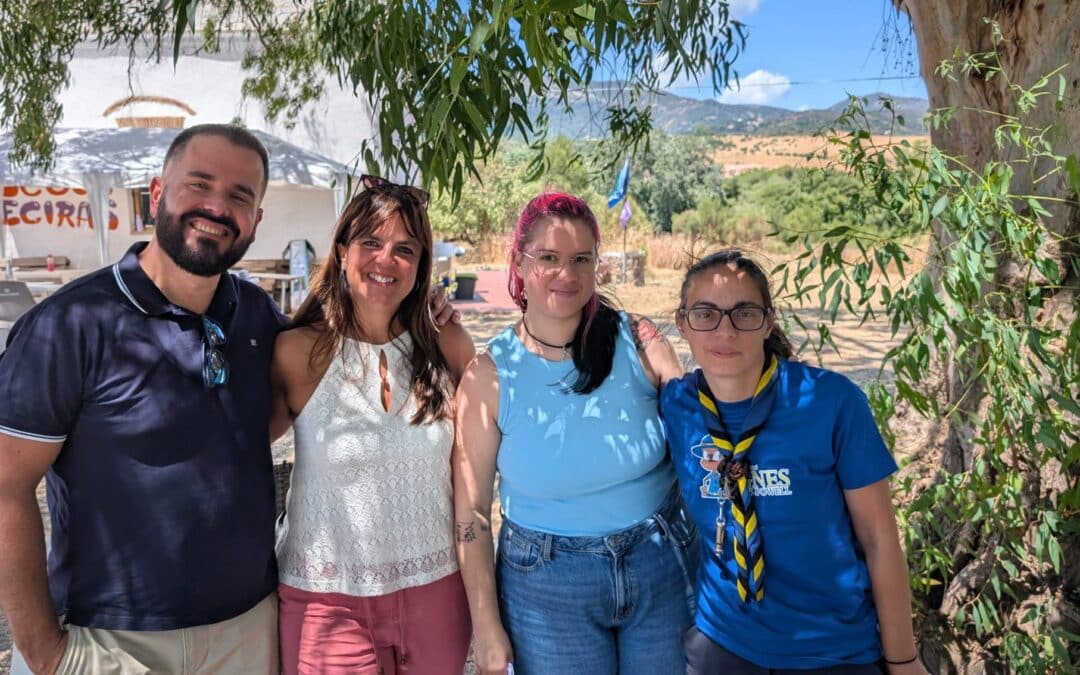
Ocnos offers practical guidance to Agnes Baden-Powell Scout families
On Sunday 12 July 2026, Ocnos Psychology Clinic held a practical session for families and volunteers from the Agnes Baden-Powell Scout Group. Héctor Lozano, Rocío Rodríguez and María Ángeles Sanz discussed how to observe children’s behaviour, support their emotions and recognise when professional guidance may be helpful.

Tantrums in children: when they are normal, how to respond and when to seek help
Tantrums in children are not always simply a behaviour problem. They often express frustration, tiredness, a need for limits or difficulty regulating emotions. In this guide, María de los Ángeles Sanz Ruiz, General Health Psychologist at Ocnos Psychology Clinic, explains how to understand tantrums, what to do before, during and after them, and when it may be helpful to seek psychological support.

You Do Not Have to Choose Who You Will Be Forever: Héctor Lozano’s Careers Week Talk at Prior Park Gibraltar
Héctor Lozano Jiménez, Director of Ocnos Psychology Clinic, visited Prior Park School Gibraltar during Careers Week to speak with students about career choices, transferable skills and the idea that a professional life does not need to be a straight line to be meaningful.
Indicative high-ability test: O-SIAC for children, teenagers and adults
O-SIAC is Ocnos Psychology Clinic’s indicative screening for exploring high-ability indicators across age groups. It does not diagnose giftedness or measure IQ, but it can help organise observations and decide whether a professional assessment may be useful.
Night terrors in young children: what to do and when to worry
Night terrors in young children can be frightening for families, even though the child often remembers nothing the next morning. María de los Ángeles Sanz Ruiz explains what they are, what to do during an episode, when to seek help and how they can be understood from a child psychology perspective.