

High abilities: psychological assessment and support in Campo de Gibraltar
A service designed for children, adolescents and adults when there is a suspicion of high abilities, school or emotional mismatch, perfectionism, persistent boredom, anxiety, or doubts about whether ADHD, dyslexia or other associated difficulties may also be present.
A service to understand more clearly what may be happening
High abilities do not always look like “very high intelligence” or “excellent grades”. In clinical practice, what often appears first is something else: mental overload, constant boredom, emotional intensity, blockage, anxiety, perfectionism, or the feeling that a person processes the world differently from the people around them.
At Ocnos Psychology Clinic, we offer a clear, human and rigorous assessment to help make sense of these signs. The aim is not to place a quick label on someone, but to understand the person’s profile more accurately, distinguish between possible explanations, and guide the next steps in a meaningful way.
Session fee
The first session helps us listen to the case, review relevant signs, and consider whether psychological guidance, therapeutic support, or a broader assessment may be appropriate.
What we mean by high abilities
High abilities refer to cognitive functioning above the average range, but this does not mean that every person with this profile looks the same. Some stand out through reasoning, language or very fast understanding. Others are more marked by creativity, depth of thinking, intense curiosity or particularly high sensitivity.
One of the most common mistakes is to reduce high abilities to good grades or to a very visible form of being “brilliant”. In real life, this is not always the case. Some people with high potential become frustrated, bored, disconnected from learning, or develop emotional difficulties precisely because their way of thinking and feeling has not been properly understood.
Signs that may point to high abilities
These signs are not a diagnosis, but they can be useful indicators when several of them appear together and remain present over time. It is worth paying attention when there is a combination of intense curiosity, ease with complex ideas, overthinking, frequent boredom, perfectionism, heightened sensitivity, or the sense of moving at a different pace from others.
In childhood and adolescence
- Very elaborate questions for their age.
- Fast learning when something genuinely interests them.
- High emotional or sensory sensitivity.
- Persistent boredom in repetitive environments.
- Strong frustration when things are not perfect.
- Difficulty feeling understood by peers.
In adults
- A long-standing feeling of mismatch or not quite fitting in.
- Very fast thinking or difficulty switching thoughts off.
- High self-demand and a tendency to analyse everything.
- Dissatisfaction in environments with little stimulation.
- A history of feeling “too intense” or “different”.


When the issue is not the ability, but the distress around it
Many people with high abilities do not come to therapy because they are “ahead of others”, but because they feel exhausted, blocked or out of place. In some cases there is constant boredom; in others, extreme self-pressure, anxiety, difficulty adapting to the pace of the environment, or the feeling that nobody really understands how they work.
This may be seen in children, adolescents, and also adults who have spent years interpreting their difficulties as laziness, oddness or lack of effort. Understanding the profile properly can change how the whole situation is viewed and help stop oversimplifying something that is actually more complex.
having high abilities does not automatically lead to wellbeing, easy adaptation or consistently high performance. In some cases, the opposite happens: the more intense and complex the profile, the more important it becomes to offer an accurate understanding and well-directed support.
High abilities and twice exceptionality
A particularly important area is twice exceptionality, meaning cases where high abilities coexist with another condition that also needs attention. This can make a profile harder to recognise or can lead to misunderstandings for many years.
High abilities and ADHD
Great mental speed, cognitive intensity and deep curiosity may coexist with attention difficulties, impulsivity, uneven organisation, or trouble sustaining tasks that feel under-stimulating. That is why these cases benefit from careful assessment within the area of neuropsychology.
High abilities and dyslexia
Strong cognitive abilities may also coexist with specific difficulties in reading, writing or verbal processing. This can hide part of a person’s real potential and create very confusing messages at home or at school.
Not everything is ADHD, not everything is anxiety, and not everything can be explained simply by high abilities alone. Sometimes there are several pieces at the same time, and the clinical task is precisely to organise them with good judgement.
How this service can help
The purpose of this service is to bring clarity. In some cases, an initial consultation may be enough; in others, it may be helpful to explore a broader psychological assessment or a more specific neuropsychological evaluation. What matters is not getting stuck between intuition, misunderstood labels and partial explanations.
Listening to the case
We explore which signs led to seeking help and how they affect daily life.
Understanding the profile
We look at strengths, emotional distress, adaptation, and any associated difficulties.
Clear guidance
We explain which hypotheses make the most sense and what next steps may be helpful.
Psychological support
When needed, we also work on anxiety, perfectionism, self-esteem or mental blockage.

Héctor’s perspective on high abilities
From Héctor Lozano Jiménez’s clinical perspective, one of the most common mistakes is to turn high abilities into an empty label or an automatic explanation for everything. What is actually useful is understanding how the person experiences the way they think, feel and respond to the world, and what impact that has on their wellbeing, learning and relationships.
In therapy, the work often involves organising several pieces at once: perfectionism, anxiety, blockage, school history, a sense of not fitting in, mental fatigue, ADHD, dyslexia or other associated difficulties. When these pieces are properly understood, the decisions that follow are usually much clearer and more helpful.
You can learn more about Ocnos’ professional approach on the page for Héctor Lozano Jiménez and in the area of psychological assessment.
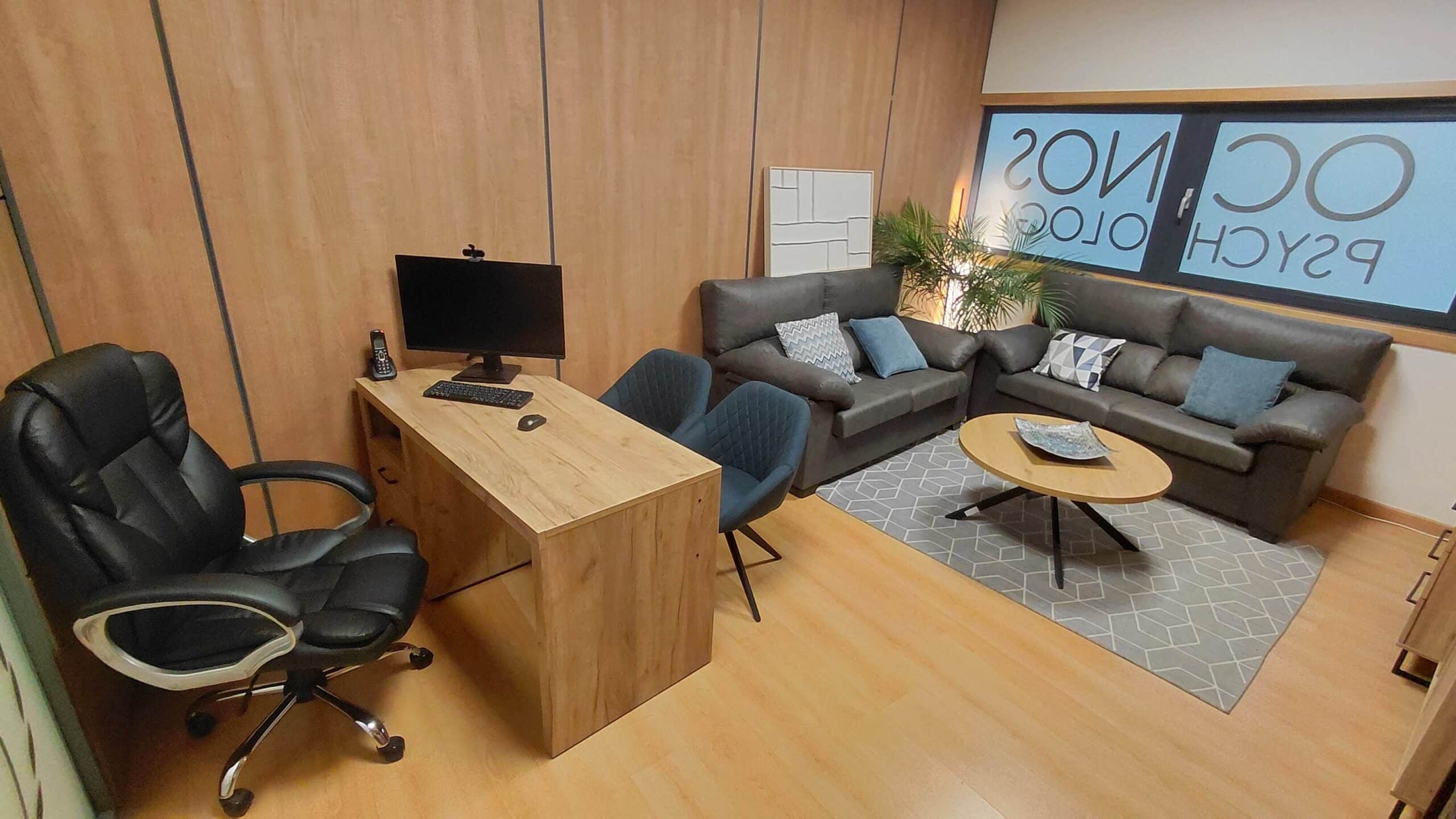
Care in Palmones for people across Campo de Gibraltar
We see clients at Ocnos Psychology Clinic in Palmones, with easy access for people from Palmones, Algeciras, La Línea de la Concepción, Los Barrios, San Roque, Sotogrande and Gibraltar. We also offer online sessions when that suits the case better.
The individual 1-hour session costs €70. It can be a helpful first step when there is a suspicion of high abilities, doubts about twice exceptionality, or the need to better understand emotional distress that does not seem to fit the usual explanations.
Frequently asked questions about high abilities
Clear answers to some of the most common questions when a family or an adult starts wondering whether a high-ability profile may be present.
Do high abilities always mean getting very good grades?
No. Some people with high abilities have excellent academic performance and others do not. Performance also depends on motivation, anxiety, emotional regulation, boredom, the environment and any associated difficulties.
Can high abilities be identified in adults?
Yes. Some adults come to therapy with a long-standing sense of mismatch, overthinking, chronic boredom or emotional intensity, and begin to wonder whether the way they function fits a high-ability profile.
Can high abilities and ADHD exist at the same time?
Yes. It is a possible combination and not always easy to identify. That is why a careful assessment is important, rather than relying on oversimplified explanations.
What is the difference between suspecting high abilities and having a professional assessment?
A suspicion can be a useful starting point, but a professional assessment helps organise the information more clearly, understand the person’s actual profile, and decide what kind of support may be needed.
Is this service only for children?
No. We also work with adolescents and adults. For many people, the question of high abilities first appears in adulthood.
How much does the session cost?
The individual 1-hour session costs €70.
Take the next step with more clarity
If you have been wondering for some time whether high abilities may be part of the picture, or if you feel that some important pieces are not fully making sense in development, learning or emotional wellbeing, a good assessment can help you understand more clearly what may be happening and what support is likely to be most useful.
Individual 1-hour session: €70.