


Key point: O-SIAC — Ocnos Screening of High Ability Indicators — is an indicative questionnaire for children, teenagers and adults. It explores five areas of functioning and returns a profile by dimension, without turning the result into a diagnosis or a supposed probability of being “gifted”.
When a family asks whether their child might have high abilities, the answer rarely fits into a single score. Sometimes there is very rapid learning and exceptional curiosity; at other times there may be boredom, uneven attainment, perfectionism or a striking gap between what the child understands and what they manage to demonstrate.
Something similar can happen in adulthood. Some people begin to consider the possibility after years of self-directed learning, unusually deep interests or an ease in connecting ideas, but an online questionnaire cannot confirm high intellectual ability on its own.
That is why we have updated this article and added O-SIAC, an Ocnos screening tool that organises responses by area and adapts the questions to five age ranges. If you need a professional assessment, you can visit our page on high abilities and psychological assessment or our general psychological assessment service.

What O-SIAC is and what it is for
O-SIAC — Ocnos Screening of High Ability Indicators is an indicative tool developed by Ocnos Psychology Clinic. It is not intended to imitate an intelligence test or replace standardised psychometric instruments. Its purpose is more specific: to structure signs that a family, teenager or adult may notice and to support a more informed clinical or educational conversation.
The questionnaire has separate versions for ages 3–5, 6–8, 9–12, 13–17 and adults. For children and teenagers, it is completed by an adult who knows them well; the adult version is a self-report.
There is also a separate section on context and possible discrepancies. This includes issues such as boredom with repetitive work, gaps between apparent ability and attainment, or a very uneven profile. These responses may be clinically relevant, but they are not added as though they were a direct measure of intelligence.
Privacy: O-SIAC is calculated in your browser. You do not need to enter a name, telephone number, email address or other identifying information, and your questionnaire responses are not sent to Ocnos.
What a screening questionnaire can tell you — and what it cannot
A screening questionnaire can show that certain behaviours occur very frequently: learning after very little repetition, seeing relationships between concepts, pursuing knowledge independently, generating alternative solutions or sustaining intense concentration when the subject is genuinely engaging.
What it cannot do is turn those observations into a diagnosis. Nor can it calculate an IQ. The National Association for Gifted Children advises that tests should not be the sole source of identification and that objective and subjective information should be combined.
The Standards for Educational and Psychological Testing also emphasise that score interpretation must be supported by evidence for the intended use. For that reason, O-SIAC reports the frequency of indicators by area rather than assigning an automatic label of “high ability”.
Do not interpret 80/100 as an “80% probability”. It means that, within that dimension, the selected responses reflect a high frequency of the indicators explored. It is neither a population percentile nor a percentage certainty of a diagnosis.
O-SIAC: indicative screening of high-ability indicators
How to interpret your O-SIAC profile
The result is shown across five separate areas. This helps prevent a clear strength from being diluted within one total score. Someone might, for example, show very frequent indicators in reasoning and curiosity but a more moderate pattern in motivation or language.
The O-SIAC ranges are descriptive: few indicators, some indicators, frequent indicators or very frequent indicators. They are not population norms and they do not create a diagnostic cut-off.
This may be a reasonable reason to explore further, particularly if there is an educational, emotional or functional question, or a clear gap between potential and attainment.
It should not be dismissed simply because it does not appear across every dimension. High ability can be specific rather than uniform.
It may be useful to collect concrete examples, compare settings and consider whether the pattern is stable or appears only in very specific situations.
This does not rule out high ability where there may be masking, associated difficulties, limited opportunities for learning or a particularly uneven profile.
In Andalusia, the education system includes high intellectual ability within the broader framework of specific educational support needs. Families can consult the Junta de Andalucía’s official information on high intellectual abilities (Spanish-language resource).
What we mean by high abilities
High abilities are not the same as simply getting excellent marks. The Junta de Andalucía uses a broad concept that can include exceptional use and integration of logical, numerical, spatial, memory, verbal or creative resources, as well as specific or complex talents.
Clinically, the aim is to understand the full profile: how the person learns, what kinds of problems they solve easily, how they transfer what they have learned, the role of creativity and motivation, and whether anything may be obscuring part of their potential.
This wider view is particularly important when there are also signs of neurodivergence, attentional difficulties, specific learning difficulties or marked differences between areas of functioning.
Signs of high ability that families may notice at home
There is no checklist that every high-ability child must fully match. Even so, some behaviours may stand out when they are consistent and notably advanced for age.
Understands new material with little repetition and applies what has been learned in different situations.
Notices patterns, infers rules, spots contradictions or sees complex relationships.
Does not stop at asking “what”, but wants to understand causes, mechanisms and consequences.
Uses unusually precise language, explanations or concepts for age.
Generates alternatives, combines ideas and finds less obvious ways of approaching problems.
Can sustain strong attention when genuinely interested, although not necessarily during repetitive tasks.

High ability does not always mean high grades
Excellent school attainment can accompany high ability, but it is not required. Some children understand material quickly yet submit incomplete work, switch off when learning becomes repetitive or struggle with organisation.
High ability may also coexist with fear of making mistakes, perfectionism, anxiety or difficulty sustaining effort when a task feels intellectually unrewarding. For that reason, school marks should not be used as the only filter.
A thorough assessment looks at the overall picture rather than the report card alone: reasoning, learning, attention, executive functions, emotional adjustment, language, family and school context and, where relevant, attainment in reading, writing or maths.
When there is twice exceptionality or a very uneven profile
Twice exceptionality refers to situations in which marked cognitive strengths coexist with another condition or difficulty that can interfere with learning or day-to-day functioning. Ability may compensate for a difficulty for years, while the difficulty itself can make the person’s strengths less visible.
This can occur alongside ADHD, dyslexia or other specific learning difficulties. High ability and autism can also coexist; where this is suspected, it is important to distinguish the features of each profile and assess overall functioning. Ocnos also offers a dedicated autism spectrum assessment service.

O-SIAC for adults: why this version is different
In adults, we deliberately avoid treating very non-specific experiences — such as emotional intensity, sensory sensitivity or feeling different — as direct evidence of high ability. These experiences can occur in many people for many different reasons.
The adult O-SIAC therefore focuses mainly on learning, reasoning, conceptual thinking, transfer across domains, cognitive flexibility, intellectual autonomy and learning history. Contextual features are reported separately to reduce the risk of simplistic interpretation.
If an adult needs a more rigorous understanding of their cognitive profile, the appropriate next step is a psychological assessment designed around the specific question that needs answering.
When a psychological assessment may be useful
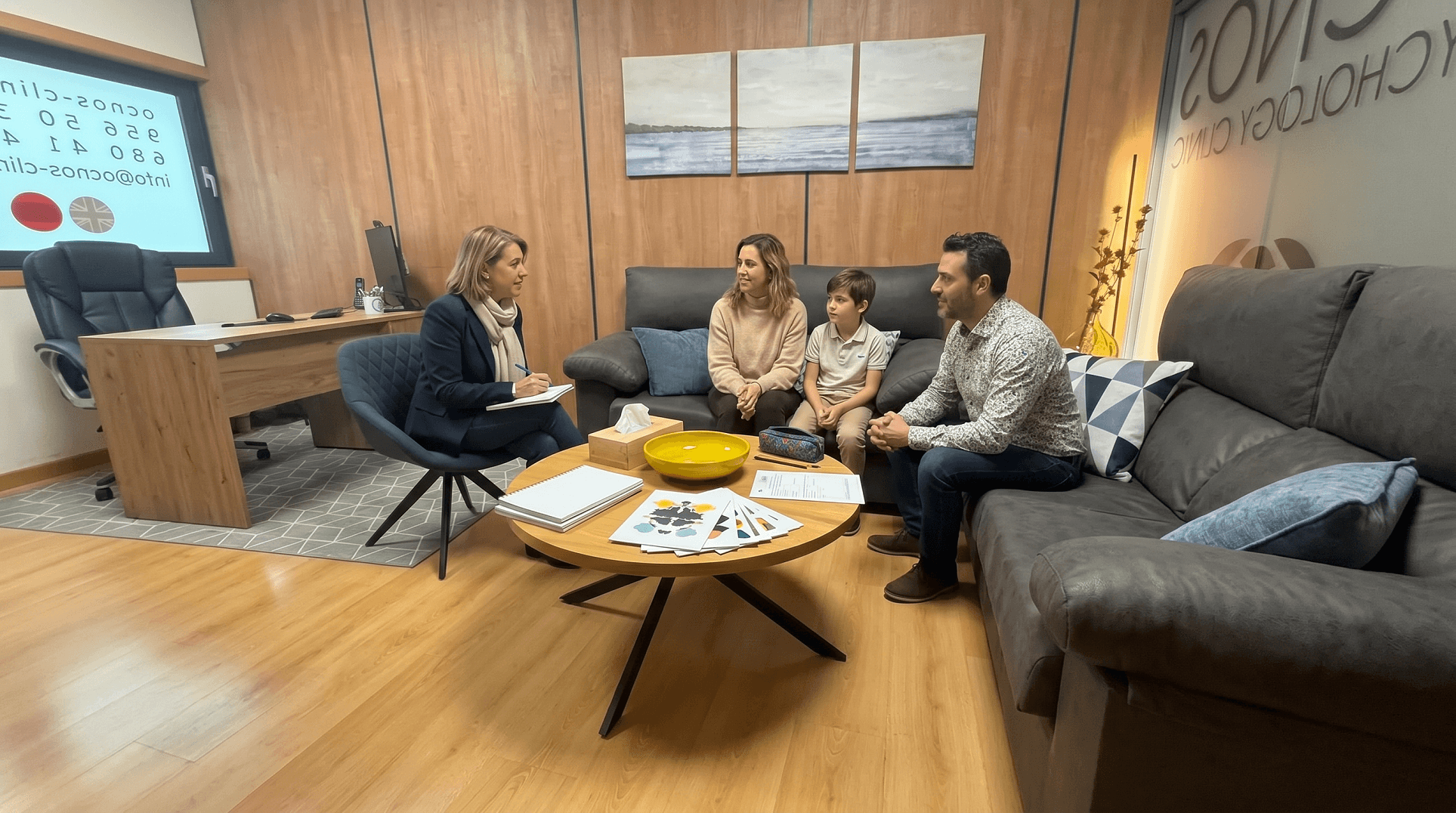
An assessment can be useful when questions persist over time, when there is a striking gap between what someone appears able to understand and what they manage to demonstrate, or when the profile is creating educational, occupational, emotional or adjustment difficulties.
For children and teenagers, an assessment may also be worth considering when home and school see very different things, when there is persistent school refusal or boredom, intense frustration, unexpectedly low attainment or a suspected associated difficulty.
A practical way to think about it: the question does not have to be only “does this person have high abilities?”. It is often more useful to ask “what explains this profile, what does this person need, and what decisions could genuinely help?”.
What a thorough psychological assessment can include
A rigorous assessment is not simply one test followed by a number. Depending on age and the referral question, it may draw on several sources:
- Clinical and developmental interview.
- Family information and, where relevant, school information.
- Standardised cognitive measures appropriate to age.
- Assessment of learning where there are questions about reading, writing or maths.
- Attention, memory, executive functioning and organisation where clinically relevant.
- Emotional, behavioural and adaptive functioning.
- Analysis of discrepancies between strengths and difficulties.
- A written report with interpretation and individualised recommendations.
- A feedback session to explain the results and answer questions.
In some cases, a neuropsychological perspective can be useful, particularly where the referral question includes attention, memory, executive functions or a complex cognitive profile.
The role of school and a private psychological report
Within the education system, school guidance professionals and the relevant educational teams have a specific role in detecting indicators, carrying out educational assessment and recommending support. The Junta de Andalucía has its own procedures for pupils with specific educational support needs.
A private psychological report does not replace the school process. It can, however, provide detailed clinical and psychometric information that helps the family understand the profile and have a more informed conversation with the school.
When both perspectives are coordinated well, the focus moves away from obtaining a label and towards deciding which supports, adaptations, enrichment opportunities or educational decisions make sense for that particular pupil.
NEAE educational support grants and high ability: what to check
Families sometimes ask whether a private report can be used when applying for educational support related to specific educational needs. The answer depends on the particular call for applications and the official documentation required.
A psychological report may contribute useful information, but it does not by itself guarantee an award and does not replace any educational certification required. Before applying, it is sensible to check the current official criteria and coordinate with the school.
Official information on educational support

High-ability assessment at Ocnos Psychology Clinic
Ocnos Psychology Clinic is based in Palmones and works with families and adults across Campo de Gibraltar and the surrounding area. You can also find local information for Los Barrios, Algeciras and La Línea de la Concepción.
Assessments are organised according to age, the reason for referral and the question that needs answering. The aim is not to obtain a quick label, but to understand the profile and translate the findings into useful recommendations.
Héctor Lozano Jiménez
Registered Health Psychologist · COPAO AN 11777 · Director of Ocnos Psychology Clinic
View Héctor’s profile

If O-SIAC leaves you with questions, the next step can be to clarify them
A screening questionnaire can guide you. When you need to understand what is actually happening, an individual assessment can help distinguish strengths, associated difficulties and specific needs.
Sources and criteria used for this update
- National Association for Gifted Children. Assessments & Tests and Identification.
- American Educational Research Association, American Psychological Association & National Council on Measurement in Education. Standards for Educational and Psychological Testing.
- International Test Commission & Association of Test Publishers. Guidelines for Technology-Based Assessment.
- Junta de Andalucía. Altas capacidades intelectuales — Escuela de Familias (Spanish).
- Renzulli, J. S., Smith, L. H., White, A. J. et al. Scales for Rating the Behavioral Characteristics of Superior Students (SRBCSS-III). Routledge.
- Pfeiffer, S. I. (ed.). Handbook of Giftedness in Children: Psychoeducational Theory, Research, and Best Practices. Springer.
- Jiménez Fernández, C. & Álvarez González, B. Diagnóstico y educación de los más capaces.
Frequently asked questions about O-SIAC and high abilities
Does O-SIAC diagnose high abilities?
No. O-SIAC is an indicative screening tool. It explores indicators across several areas, but it does not measure IQ and does not replace an individual psychological assessment using appropriate instruments.
What does a score of 80/100 in one area mean?
It means that, within that dimension, the selected responses show a high frequency of the indicators explored. It does not mean an 80% probability of high ability and it is not a population percentile.
From what age can O-SIAC be used?
The tool includes versions from age 3 onwards: 3–5, 6–8, 9–12, 13–17 and adults. For children and teenagers, it is completed by an adult who knows them well.
Is there an O-SIAC version for adults?
Yes. The adult version is a self-report and uses questions adapted to adult functioning, focusing on learning, reasoning, conceptual thinking, transfer, creativity and intellectual autonomy.
Does a child with excellent grades necessarily have high abilities?
No. High academic attainment and high abilities are not the same thing. Equally, someone with high ability may have uneven attainment when boredom, low motivation, associated difficulties or an uneven profile are present.
Can high ability coexist with ADHD, dyslexia or autism?
Yes. Marked cognitive strengths can coexist with ADHD, dyslexia, autism or other difficulties or conditions. When this happens, it is important to assess the full profile because strengths and difficulties can mask one another.
What is the difference between O-SIAC and a psychological assessment?
O-SIAC organises responses about observed behaviours and indicators. A psychological assessment can integrate interview data, developmental history, standardised measures, school or occupational information and clinical judgement to answer a specific question.
Does a private psychological report replace school assessment?
No. Within education, identification and educational assessment follow the school system’s procedures. A private report can complement that process by providing relevant clinical and psychometric information.
Does a private report guarantee an educational support grant?
No. It may form part of the documentation and provide useful information, but eligibility depends on the current call for applications, the official criteria and the evidence required.


