

Couples therapy in Palmones, near Sotogrande and Gibraltar
When you still care about each other, but no longer know how to talk without hurting one another, therapy can help you understand what is happening between you. At Ocnos, we offer a professional, neutral and safe space to improve communication, manage conflict, rebuild trust and make conscious decisions about your relationship.
We will ask for your name, surname, email address and phone number. Once you have completed your details, we will contact you by WhatsApp to confirm the appointment.
It is not about finding someone to blame, but understanding the pattern that traps you
Many couples come to therapy with a very similar feeling: “we have talked about this a thousand times, but we always end up in the same place”. Sometimes the visible problem is a specific argument, emotional distance, loss of desire, jealousy or an affair.
However, underneath this there is often something deeper: ways of communicating, defending, withdrawing or protecting oneself that end up damaging the bond. At Ocnos Psychology Clinic, we work with couples in a structured way, without turning the session into a trial or another argument.
We observe how conflict is activated, what each partner needs, what emotions appear and what skills may be missing in order to speak without destroying one another.
Couples therapy does not promise that every relationship must continue. It helps you understand what is happening, repair what can be repaired and make more conscious decisions, whether the aim is to rebuild the relationship or to separate with respect.
When anxiety, low mood, intimacy difficulties or identity-related issues are also present in the relationship, we can guide the process towards complementary support such as depression treatment, affirmative therapy or sex therapy.

Why do couples usually come to therapy?
Every relationship has its own story, but some themes appear very often in therapy. Naming them helps many couples realise that they are not alone and that the problem can be worked on with structure.
Signs that couples therapy may help you
You do not need to wait until the relationship is at breaking point. In fact, many couples make better progress when they seek help before the strain becomes chronic.
You argue about the same things repeatedly
The topic changes, but the scene repeats itself: one person pushes, the other defends or shuts down, the tone rises and no one feels heard.
There is emotional distance
You live together and share responsibilities, but you feel that complicity, tenderness or the sense of being a team has faded.
Communication has become defensive
A simple conversation ends in blame, irony, long silences or words that hurt more than they help.
There is jealousy or mistrust
The relationship becomes filled with checking, suspicion, fear, control or a constant need for explanations.
There has been a significant wound
An affair, a lie, a previous break-up or a deep disappointment can leave the couple trapped between wanting to continue and not knowing how to trust again.
You need to make a decision
Sometimes therapy helps couples rebuild. At other times, it helps them decide whether to continue, separate or change the way the relationship is functioning.

How we work with couples therapy at Ocnos
In a first session, we are not looking to decide who is right. We try to understand how your relationship works when it is under pressure: what happens before an argument, what each person feels, what each person is trying to achieve, what they fear losing and what tends to happen afterwards.
From there, we work with specific goals: learning to speak without escalating, listening without preparing a defence, asking for change more clearly, repairing after an argument and making important decisions without doing so from anger.
- We assess the relationship dynamic, not only the visible symptoms.
- We identify repeated patterns of attack, defence, avoidance or disconnection.
- We practise emotional communication so needs can be expressed without destroying the other person.
- We work on concrete agreements that can be applied outside the therapy room.
- We review progress so therapy does not remain just “talking”, but becomes behavioural change.
What exactly happens in the first appointment?
Many people ask for help with the fear of “not knowing what to say” or of the session turning into yet another argument. That is why we think it is important to explain clearly what you can expect.
Each person has space to speak
The aim is for both partners to be able to express themselves. It is not about one person speaking while the other is left unheard.
We ask specific questions
We will ask about the reason for coming, the history of the relationship, the most repeated conflicts and what each person hopes for.
Different versions are acknowledged
You do not need to arrive in agreement about what is happening. Very often, each person experiences the problem differently.
We consider the best format
If one person feels very blocked or does not want to speak, we can also consider how to move forward in the most useful and respectful way possible.
Improving communication is not about talking more, but talking differently
Many couples talk a lot, but listen very little. One person tries to explain what they feel and the other hears an accusation. One asks for closeness and the other feels pressured. One needs to solve it immediately and the other needs to withdraw in order not to explode.
In therapy, we work with these differences carefully. It is not about forcing one person to communicate exactly as the other wants, but about creating a shared language. To do that, we practise specific skills: asking without attacking, listening without interrupting, validating without having to agree and pausing before the conversation becomes destructive.
Healthy communication does not mean always agreeing. It means being able to talk about difficult things without turning every difference into a threat to the relationship.

Resolving conflict does not mean never arguing
Healthy couples also disagree. The difference lies in how conflict is managed, how much damage it leaves and whether there is capacity for repair afterwards.
When everything ends in blame
We help separate a specific complaint from a personal attack. “I need more help at home” is not the same as “you never do anything”.
When one pursues and the other withdraws
Many couples enter a cycle in which one person pushes harder and the other shuts down further. Understanding that pattern is often a turning point.
When wounds remain unrepaired
Resentment does not disappear simply because time passes. In therapy, we work on how to talk about the wound without reopening it in the same way.

Rebuilding trust requires more than promising that everything will change
When trust has been damaged, words can help, but they are not enough. The couple needs consistency, transparency, emotional repair and time. They also need to distinguish between asking for reassurance and turning the relationship into surveillance.
At Ocnos, we work so that trust does not depend only on “believing” the other person, but on building safer relational conditions: clear agreements, boundaries, emotional responsibility and ways of repairing when someone makes a mistake.
This is especially important after an affair, a significant lie, a previous break-up or a prolonged period of disconnection.
It is also important to know what you will not find here
Explaining this helps avoid unrealistic expectations. Couples therapy does not work well when it is understood as a trial or as a negotiation to impose one version over the other.
We do not take one side against the other
We do not act as judges. Our work is to understand the dynamic and help both partners change what is harming the relationship.
We do not force you to stay together
Therapy does not begin from the idea that every relationship must be maintained at any cost. Sometimes it helps to rebuild, and sometimes to decide with greater clarity.
We do not justify violence
If there is fear, control, threats or aggression, the priority is not to “communicate better”, but the safety and protection of the person at risk.
We do not promise magical change
Real change usually comes from small sustained behaviours, practice outside the therapy room and commitment to the process.
Price of couples therapy at Ocnos
A couples therapy session at Ocnos Psychology Clinic costs €110 and lasts approximately 90 minutes.
The duration is longer than an individual session because the work requires listening to both partners, observing the dynamic between the two people and dedicating time to agreements that do not remain superficial.
In the first appointment, we assess the reason for coming, the current state of the relationship, each person’s goals and whether couples therapy is the most suitable format for your situation.
Session summary
- Price: €110 per session.
- Duration: approximately 90 minutes.
- Format: in person in Palmones.
- Location: Edificio Azabache, First Floor, Office 10.
- Area: near Algeciras, Los Barrios, San Roque, La Línea, Sotogrande and Gibraltar.
You can learn more about the way we work on our team page or in Héctor Lozano’s profile.
Health psychologists supporting couples and relationship processes
At Ocnos Psychology Clinic, we work from a health-based, warm and rigorous perspective. Couples therapy may involve communication, emotional regulation, personal history, sexuality, attachment, family, parenting, decision-making and individual mental health.
Although this page is shaped by the clinical perspective of Héctor Lozano Jiménez, the value of Ocnos also lies in having a team that can support different psychological needs related to affective, family and relationship life.
All our psychologists are registered healthcare professionals. You can read about their profiles, training and registration numbers on our team of psychologists page.
“Couples therapy is teamwork: two people learning to coordinate, listen with precision and make small but consistent decisions. We are not looking to win arguments, but to build sustainable agreements.”
Héctor Lozano Jiménez, General Health Psychologist and Director of Ocnos Psychology Clinic.

Héctor Lozano Jiménez
General Health Psychologist · Director · COPAO AN11777
View profile
Rocío Rodríguez Boza
General Health Psychologist · COPAO AN13748
View profile
María Ángeles Sanz Ruiz
General Health Psychologist · COPAO AN12933
View profileWhen there is violence, fear or control, safety comes first
Couples therapy is not the right resource in every situation. If there is violence, threats, fear, coercive control, aggression or one person cannot speak freely because they fear the consequences, the priority is not to “improve communication”, but to protect the person at risk and seek specialist help.
In these cases, it is important to seek professional guidance and activate the necessary safety resources. If there is immediate danger, contact the emergency services.
A safe environment to talk about difficult things
Ocnos Psychology Clinic is located in Palmones, inside Edificio Azabache, opposite Quirón Campo de Gibraltar Hospital and close to the Torres de Hércules. We support couples from Palmones, Los Barrios, Algeciras, La Línea de la Concepción, Sotogrande and Gibraltar.
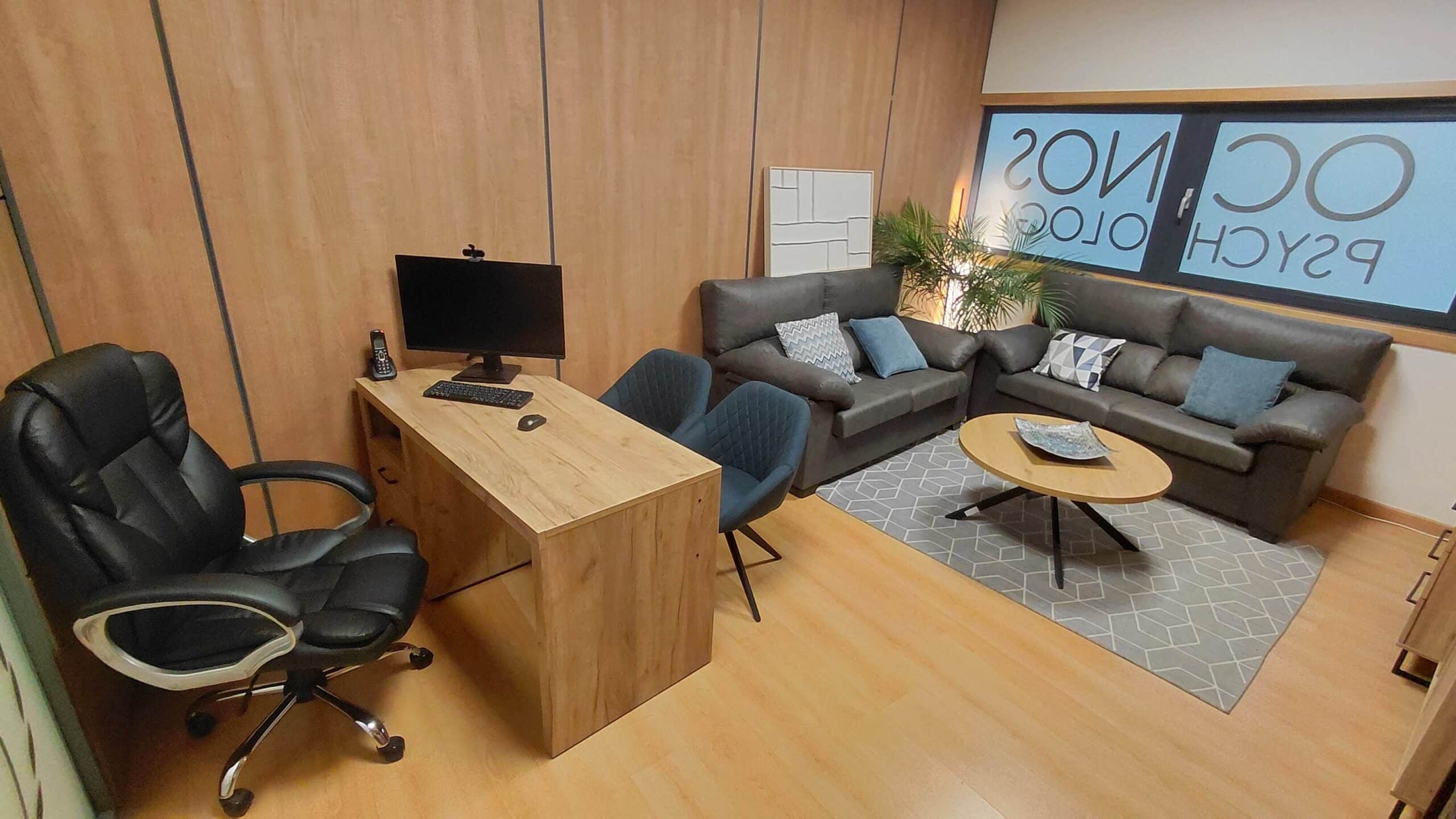
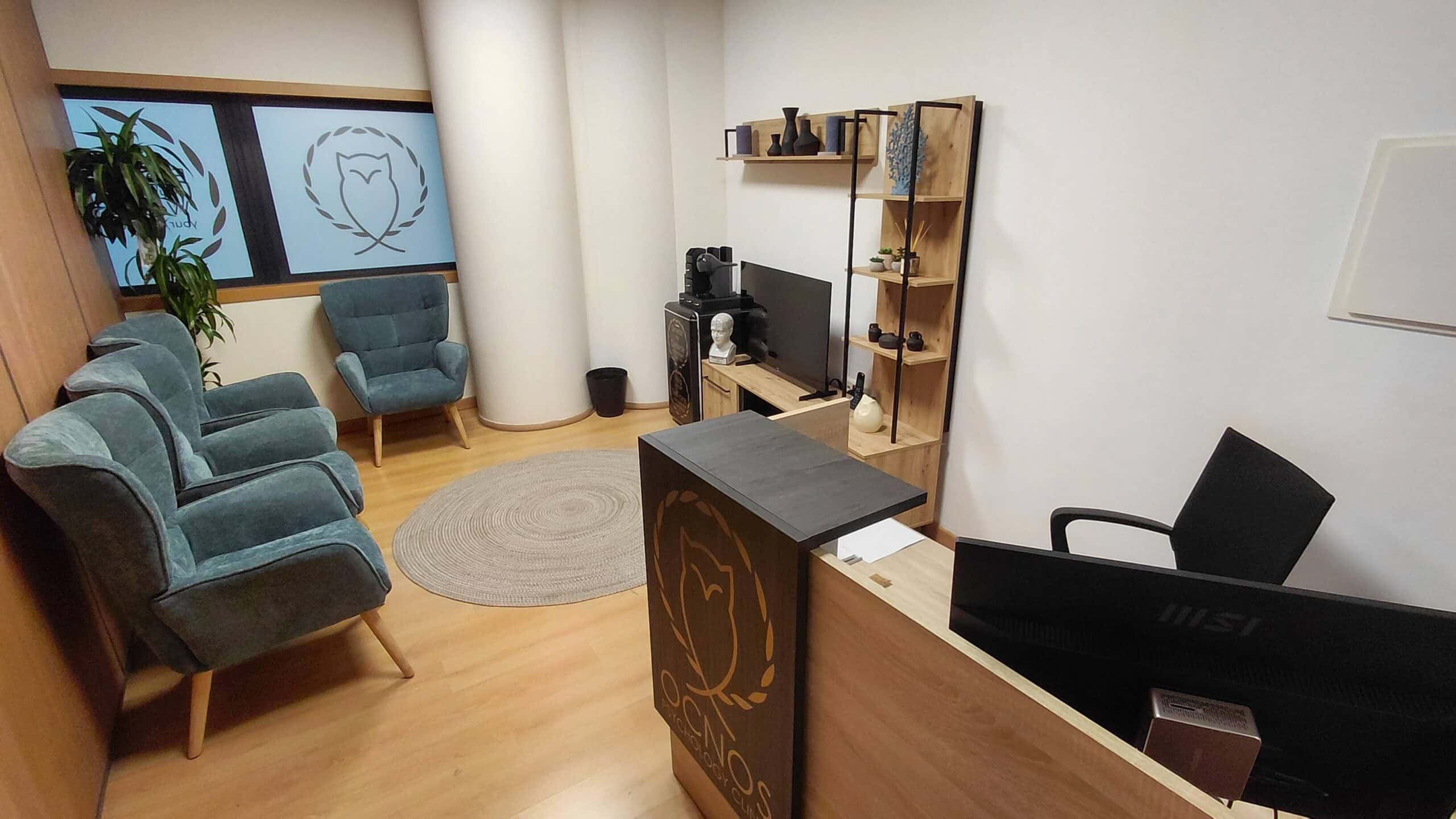
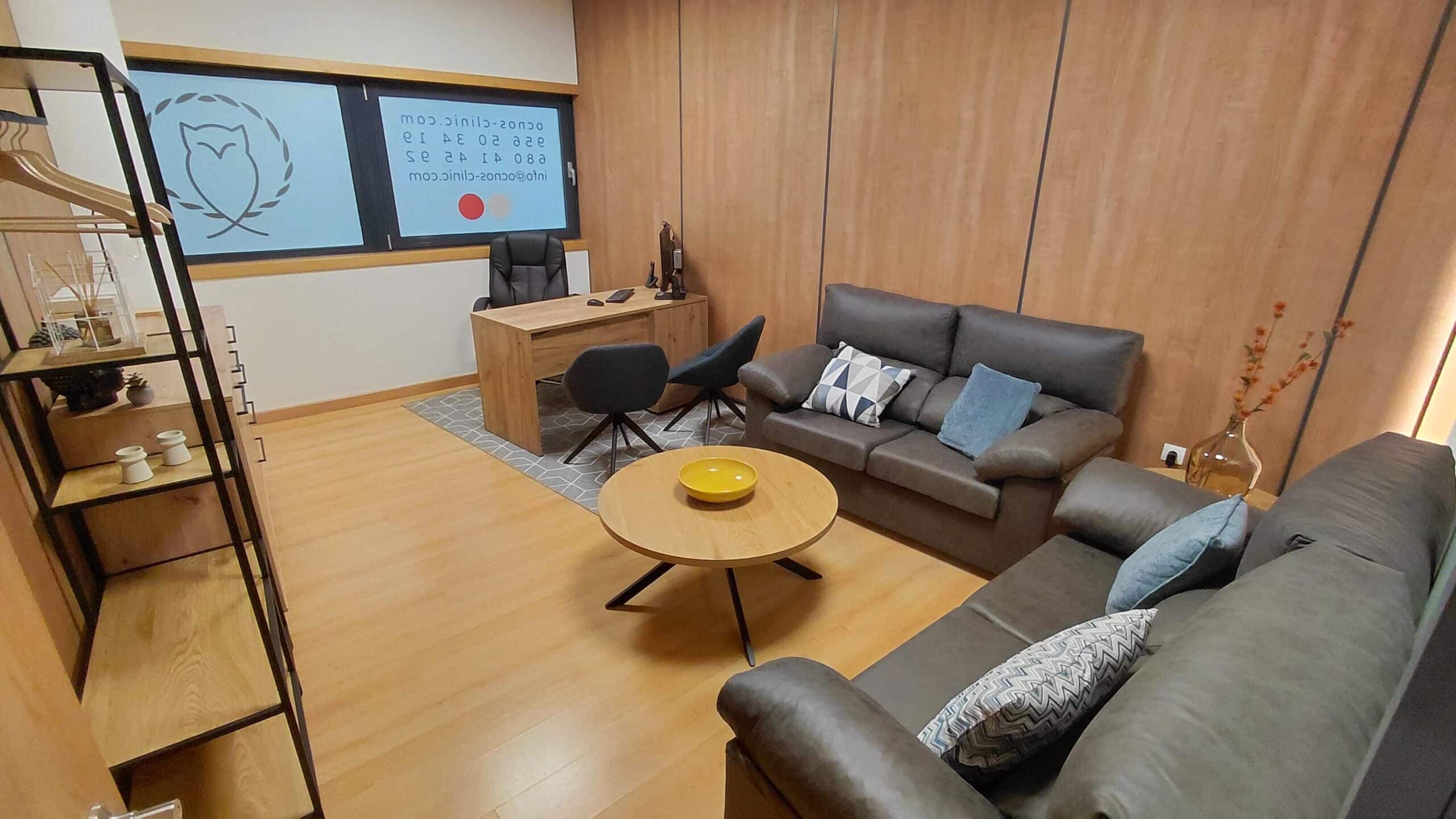
Couples therapy near Algeciras and Los Barrios
Our clinic is located in Palmones, making it convenient for couples coming from Palmones, Algeciras, San Roque, La Línea de la Concepción, Sotogrande and Gibraltar.
Address: Edificio Azabache, First Floor, Office 10, 11379, Palmones, Cádiz.
What can change when a couple starts working differently?
Couples therapy does not automatically remove problems, but it can change the way the couple understands, talks about and resolves them.
Better communication
You learn to express needs without attacking and to listen without turning every sentence into a defence.
Greater mutual understanding
Therapy helps reveal what may be underneath anger: fear, loneliness, exhaustion, need for support or feeling overlooked.
More manageable conflict
It is not about never arguing, but learning to pause, repair and return to dialogue before causing more harm.
Rebuilding trust
When there have been wounds, we work on responsibility, transparency and sustained change, not just promises.
Personal and relational growth
Each partner learns to recognise their own reactions, limits, needs and ways of relating.
More conscious decisions
Sometimes the aim is to continue. At other times, it is to decide. In both cases, we aim for decisions that are not based only on impulse or exhaustion.
Trust is also built through real experiences
We know that seeking psychological help is an important decision. That is why, as well as explaining how we work, we invite you to read real reviews from people who have attended Ocnos Psychology Clinic.


Frequently asked questions about couples therapy
What happens in couples therapy?
In couples therapy, both partners work with the psychologist to understand the relationship dynamic, improve communication, manage conflict and build clearer agreements. The aim is not to find someone to blame, but to identify repeated patterns and practise skills for relating in a safer and more respectful way.
When is it advisable to go to couples therapy?
It is advisable when there are frequent arguments, emotional distance, communication problems, jealousy, mistrust, a crisis after an affair or significant doubts about the future of the relationship. You do not need to wait for an extreme crisis; the earlier you seek help, the easier it is often to change the dynamic.
How much does couples therapy cost at Ocnos?
A couples therapy session at Ocnos Psychology Clinic costs €110 and lasts approximately 90 minutes. It is longer than an individual session because we work with two people, two emotional experiences and a shared relationship dynamic.
What happens in the first couples therapy session?
In the first session, we gather your relationship history, the reason for seeking help, how the problem appears, what the couple has already tried and what each person hopes for. The conversation is also structured so both partners can speak with safety and respect, even if you arrive with different versions of what is happening.
How many couples therapy sessions are needed?
It depends on the reason for coming, the level of strain, both partners’ willingness and the couple’s goals. Some couples need only a few sessions to organise a specific crisis; others need a broader process to change patterns that have been repeated for years.
Can only one partner attend?
Yes. Ideally, both partners attend couples therapy. However, if one person does not want to come, it may still make sense to begin with an individual consultation to understand the situation, review options and work on the part that does depend on that person.
Does couples therapy guarantee that we will stay together?
No. Couples therapy does not guarantee that the relationship will continue, and it does not aim to maintain a relationship at any cost. Its purpose is to help you understand what is happening, improve what can be improved and make more conscious decisions, whether that means rebuilding the bond or separating more respectfully.
Can couples therapy help after an affair?
It can help if both partners are willing to work honestly. After an affair, therapy allows the couple to talk about the harm, understand what each person needs, work on responsibility, review boundaries and assess whether trust can be rebuilt realistically.
Can couples therapy help if we argue a lot?
Yes, as long as there is willingness to work. Therapy helps identify how escalation begins, what each person does when they feel attacked or unheard, and what concrete changes can reduce harm during conflict.
When is couples therapy not recommended?
It is not recommended as the first option when there is violence, threats, fear, coercive control or risk to one of the people involved. In these cases, safety is the priority and specialist resources may need to be activated before considering any joint work.
Start couples therapy at Ocnos Psychology Clinic
If your relationship has become filled with arguments, distance or uncertainty, seeking help can be a way to stop repeating the same pattern and begin to understand what needs to change.
Latest blogs and resources on couples therapy
Alongside psychological treatment, Ocnos Psychology Clinic publishes articles on relationships, communication, sexuality, emotional regulation, attachment and mental health to provide clear, responsible and useful information.
These resources can offer an initial orientation when there are questions about repeated arguments, emotional distance, jealousy, desire, intimacy, trust or the decision to continue or separate.

Hobosexuality: what it is and how housing shapes relationships
When rent stretches the budget, sharing a home can mean love, savings or necessity. Héctor Lozano explores hobosexuality and practical living arrangements with gentle humour and without easy labels.
Opening a relationship to rekindle desire: what to consider first
Opening a relationship may add novelty, but it is not an automatic treatment for low desire. This guide explores causes, motives, risks, agreements and alternatives before deciding.
We opened our relationship and now I regret it: what should we do?
A guide for when one partner regrets opening: immediate safety, understanding regret, responsibility towards others, repair and realistic options.
Jealousy in an open relationship: understanding it without turning to control
Learn to understand and manage jealousy in an open relationship without denying the emotion or turning it into surveillance, control or impossible rules.
Quad relationships: what they are, how they work and the agreements they need
An inclusive, evidence-informed guide to four-person relationships, with practical ways to manage time, prevent alliances of power and build clear, respectful agreements.
My partner wants an open relationship and I don’t: talking without pressure
A guide to facing a request for openness without confusing listening with consent: first reactions, boundaries, conversation, pressure warning signs and incompatibility.

Consensual non-monogamy: meaning, types, agreements and how to know if it suits you
A practical psychology-based guide to consensual non-monogamy: how it differs from infidelity, which models it includes, and how to discuss agreements, jealousy, care and boundaries without idealising any relationship structure.
Monogamous relationship: what exclusivity means and how to build healthy agreements
A monogamous relationship involves an agreement about exclusivity, but couples do not always mean the same thing by it. This guide explores fidelity, boundaries, attraction, desire, jealousy, digital behaviour and how agreements can change.

Open relationship: what it means, how it works and which agreements matter
A practical psychology-based guide to open relationships: motivations, consent, agreements, jealousy, sexual health and how to decide without idealising or condemning this relationship model.