


By Héctor Lozano Jiménez
General Health Psychologist (COPAO AN 11777) and Director of Ocnos Psychology Clinic
Professional registration check: COPAO – AN 11777
Key idea: neuropsychology studies the relationship between the brain, behaviour, learning, attention, memory, language and emotional regulation. In clinical practice, it should not be used simply to “label” someone, but to understand how a person functions and to guide useful decisions at home, at school, at work or within a therapeutic process.
The word neuropsychology often raises questions. Some people associate it only with brain injury, dementia or complex cognitive testing. Others link it to children with learning difficulties, ADHD, dyslexia, high abilities or a possible autism spectrum profile. Both ideas can be partly true, but they do not fully explain what neuropsychology is and when it can help.
This article has one clear purpose: to explain, in plain English, what neuropsychology is, what it can assess, when it may be useful and what role a General Health Psychologist can have in Spain when working with cognitive, emotional, behavioural or neurodevelopmental difficulties.
It is also important to separate this article from our clinical neuropsychology service at Ocnos Psychology Clinic. Here you will find an educational guide to help you understand the topic. If you need to discuss a specific case, book an appointment or understand how we work in practice, the service page will be more useful.

What is neuropsychology?
Neuropsychology is a branch of psychology that studies the relationship between the nervous system and human behaviour. Put simply, it helps us understand how brain processes are expressed in everyday life through attention, memory, language, learning, planning, emotional regulation, behaviour and social adaptation.
When a person struggles to concentrate, organise themselves, learn to read, remember information, control impulses, adapt to change, understand instructions or manage frustration, neuropsychology can help organise the information. It is not about reducing a person to a test score, but about understanding which processes are working well, which ones need support and what strategies may help.
In children and teenagers, this approach can be particularly useful when school or developmental difficulties appear. In adults, it can help clarify concerns around memory, acquired brain injury, neurological conditions, attentional difficulties, cognitive changes, anxiety affecting performance or organisation problems that interfere with work and daily life.
- How does this person learn and process information?
- How do they sustain, shift and control attention?
- How do they plan, organise and manage impulses?
- How do they use language, reading and writing?
- What role do anxiety, self-esteem, sleep or frustration play?
- What support is needed at home, at school, at work or in therapy?
What areas can neuropsychology assess?
A neuropsychological assessment does not always assess the same things. It depends on the person’s age, the reason for consultation, clinical history, family concerns and the aim of the assessment. Assessing a possible dyslexia profile is not the same as exploring attention difficulties, possible ADHD, high abilities, autism or cognitive changes in adulthood.
Attention and executive functions
These include the ability to concentrate, organise tasks, inhibit impulses, plan, change strategy, manage time and finish what has been started. They are highly relevant in ADHD, but can also be affected by anxiety, poor sleep, stress or emotional difficulties.
Memory and learning
Memory is not a single ability. It may involve verbal memory, visual memory, working memory or long-term recall. Assessing it helps identify whether the difficulty lies in attention, comprehension, storage, retrieval or the use of information.
Language, reading and writing
In children and teenagers, these areas are central when there are persistent difficulties with reading, writing, spelling, reading comprehension or possible dyslexia. A good assessment helps avoid unfair explanations such as “they are lazy” or “they do not try hard enough”.
Emotional regulation and behaviour
Behaviour cannot always be separated from cognitive functioning. A child who becomes frustrated, avoids tasks or explodes during homework may be showing a real difficulty with learning, attention, flexibility or tolerance of effort.
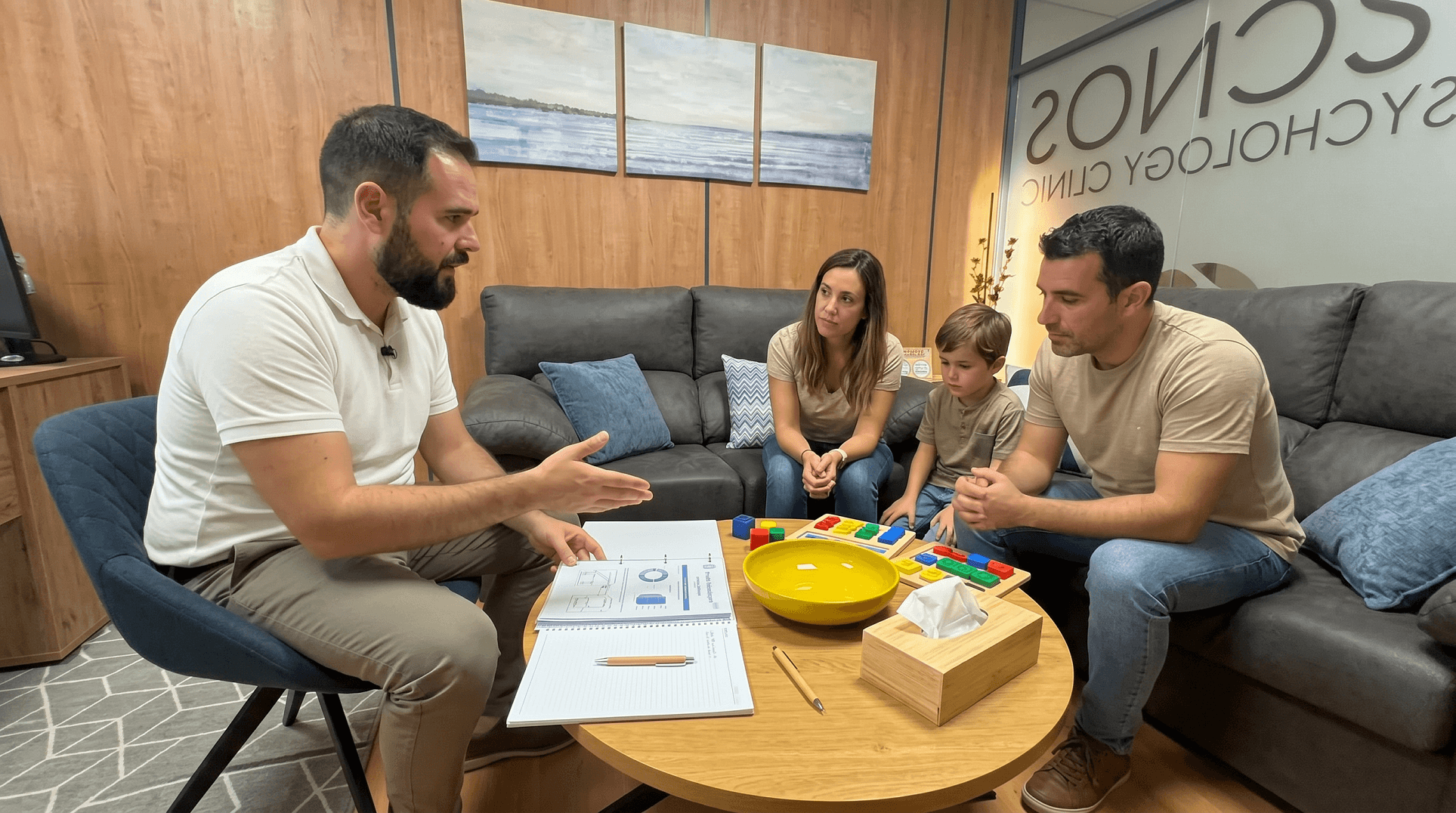
Neuropsychology does not mean testing for the sake of testing
A common misunderstanding is that a neuropsychological assessment is simply a matter of “doing tests”. Tests may be necessary, but they are not the whole process. A test without a good interview, without context and without clinical interpretation can lead to poor or even misleading conclusions.
That is why a serious assessment usually integrates several sources of information: clinical interview, developmental or medical history, observation, questionnaires, standardised tests when appropriate, family information and, in children and teenagers, school information if the family authorises it.
The aim is not for the person to “pass” or “fail”. The aim is to understand their profile: strengths, difficulties, support needs and factors that may be influencing the situation. Sometimes what looks like a cognitive difficulty is strongly affected by anxiety, depression, stress, poor sleep, grief, family difficulties or negative school experiences.
What is the difference between neuropsychology, psychology, neurology and educational support?
Neuropsychology is part of psychology, but it focuses especially on how cognitive and emotional processes relate to brain functioning and behaviour. This does not mean it replaces other professionals. In many cases, the most appropriate work is coordinated.
Neurology is a medical specialty. It assesses, diagnoses and treats diseases of the nervous system from a medical perspective. Neurologists may request tests such as MRI scans, EEGs or other neurological investigations when necessary.
Psychiatry is also a medical specialty, focused on mental health, clinical diagnosis and medication when appropriate. It may be needed when symptoms are severe, there is risk, the case is complex or medication needs to be considered.
Educational psychology, speech and language therapy, learning support and school guidance can be essential in school difficulties, language, literacy, curriculum adaptations or educational intervention. Neuropsychology can contribute a clinical understanding of the cognitive, emotional and behavioural profile, but often needs to be coordinated with these resources.
Good clinical guidance does not compete with other professionals. If a case requires a neurologist, psychiatrist, speech and language therapist, paediatrician, school counsellor or another specialist, the appropriate step is to refer or coordinate. Clinical quality also means knowing when not to work alone.
Can a General Health Psychologist practise neuropsychology in Spain?
Yes, with important nuances. In Spain, the professional figure of the General Health Psychologist is legally recognised as a regulated healthcare profession. Law 33/2011 establishes that General Health Psychologists may carry out psychological evaluations and interventions concerning aspects of behaviour and activity that influence the promotion and improvement of general health, provided these activities do not require specialised care from other healthcare professionals.
This means that a General Health Psychologist can work in private healthcare settings carrying out psychological assessment and intervention, including when the reason for consultation involves cognitive processes, learning, attention, behaviour or emotional regulation. However, legal authorisation is not the same as technical competence for every possible case.
Clinical neuropsychology requires specific training, experience, ongoing professional development and responsible use of assessment tools. It is not enough to be interested in the brain or to have completed an isolated course. When a case is complex, involves acquired brain injury, neurological disease, cognitive decline, highly specialised reports or medico-legal purposes, it may be advisable for the person to be seen by a professional with advanced training and experience in clinical neuropsychology, or by a multidisciplinary team.
The Spanish General Council of Psychology has a national accreditation for Psychologists who are Experts in Clinical Neuropsychology, and the Official College of Psychology of Western Andalusia also sets out requirements around training, experience and healthcare authorisation for supervision in clinical neuropsychology. So the honest answer is this: a General Health Psychologist may practise neuropsychological activities within their professional competence, but should do so with appropriate training, clinical prudence, clear limits and referral when the case requires it.
- Healthcare authorisation: the legal basis for practising health psychology in the appropriate setting.
- Neuropsychological training: the technical knowledge required to assess and intervene responsibly.
- Scope of the case: whether the case can be managed in health psychology or requires medical, neurological, educational or highly specialised neuropsychological input.
When can a neuropsychological assessment be useful?
Not every difficulty requires a full assessment. Sometimes a first interview, family guidance or psychological intervention is enough. However, a neuropsychological assessment can be useful when concerns persist, when usual strategies are not working or when we need to understand the person’s profile more clearly.
In children and teenagers
- Persistent difficulties with reading, writing, maths or comprehension.
- Possible dyslexia or other learning difficulties.
- Frequent lapses in attention, impulsivity, disorganisation or possible ADHD.
- Questions around high abilities, school mismatch or intense boredom.
- Social communication differences, rigidity, sensory sensitivity or possible autism spectrum profile.
- Behavioural changes that cannot be explained simply as “bad behaviour”.
- Low self-esteem, school anxiety or avoidance of tasks that require sustained cognitive effort.
In adults
- Memory, attention or mental slowness concerns that interfere with daily life.
- Difficulty organising, planning or sustaining complex tasks.
- Cognitive changes after illness, accident, prolonged stress or brain injury.
- Questions around executive functioning, work performance or adaptation.
- A need to guide psychological therapy when cognitive and emotional difficulties overlap.

Assessment is not the same as labelling
One of the main concerns families have is that an assessment may reduce a child to a label: “they are ADHD”, “they are dyslexic”, “they are autistic”, “they have high abilities”. Diagnoses can be useful when they are made carefully, because they help us understand needs, access support and make decisions. But a label explained poorly can also be harmful.
That is why, in neuropsychology, it is important to explain not only whether certain criteria are met, but what that means in everyday life. Two people with the same diagnosis may need very different support. And two people without a formal diagnosis may still have real difficulties that deserve attention.
The most useful question is not only “what is the name for this?”, but: what does this person need in order to function better, suffer less and develop with more confidence?
What does the assessment process usually involve?
The process may vary depending on the reason for consultation, but it usually follows a progressive logic. First, we listen to the concern: what is worrying the person or family, how long it has been happening, where it appears and what has already been tried. Then we decide whether it makes sense to carry out a general psychological assessment, a more specific neuropsychological assessment, family guidance or referral to another professional.
1. Initial interview
This helps organise the referral question, review background information, understand the history of the difficulty and decide whether a broad assessment is really needed.
2. Choosing what to assess
We do not assess “everything” without a reason. Tests and questionnaires are selected according to the clinical question: attention, memory, learning, language, executive functions, behaviour or emotion.
3. Clinical interpretation
Results are interpreted alongside the interview, observation, family context, school information and emotional situation.
4. Feedback and guidance
The final aim is to explain what is happening and what steps to take: family guidance, intervention, school coordination, follow-up or referral.
In some cases, a written report is provided. In others, a clinical feedback session and intervention guidance may be enough. It depends on the purpose of the process. Guidance for a family is not the same as preparing documentation for a school, doctor, administration or legal process.
What neuropsychology cannot promise
Neuropsychology can bring a great deal of clarity, but it should not be presented as a magic answer. It does not always provide an immediate diagnosis, it does not replace medical assessment when there are neurological signs, and it does not turn a complex difficulty into a simple solution.
Nor can it guarantee that a private report will automatically be accepted by every school, administration, insurer or legal process. Each context may have its own requirements. This is why it is important to clarify from the beginning what the assessment is needed for.
Signs that should not wait: sudden loss of abilities, severe confusion, disorientation, neurological changes, seizures, self-harm risk, suicidal thoughts or rapid deterioration require medical or emergency care. Psychological assessment should never delay urgent healthcare.
Neuropsychology and family life: why understanding changes the way we respond
Many families arrive in consultation exhausted. For months or years, they may have interpreted what is happening as lack of effort, bad behaviour, immaturity or defiance. When we understand that there may be difficulties with attention, learning, cognitive flexibility, sensory sensitivity or emotional regulation, the way we support the person changes.
This does not mean justifying everything. It means adjusting expectations, setting smarter boundaries, reducing unnecessary battles and teaching realistic strategies. A child with reading difficulties does not improve through criticism. A teenager with executive functioning difficulties does not suddenly become organised because we repeat “start now” twenty times. A profile with high sensitivity or rigidity does not need more pressure, but more structure, anticipation and support.
Assessment becomes useful when it leads to concrete changes: how to study, how to organise tasks, how to communicate at home, how to coordinate with school, how to manage meltdowns or blocks and when to seek psychological support.

What we do at Ocnos Psychology Clinic
At Ocnos Psychology Clinic, in Palmones, we work with a simple principle: understand before intervening. We support families in Campo de Gibraltar who are concerned about learning difficulties, attention, behaviour, development, school adaptation or questions around cognitive and emotional functioning.
Depending on the case, it may be more appropriate to begin with a psychological assessment, family guidance, an assessment focused on ADHD, dyslexia, high abilities, autism or a psychological intervention process. A full test battery is not always needed; sometimes the most helpful step is a good initial clinical orientation.
We also see adults when there are difficulties with organisation, attention, memory, performance, stress or doubts about how cognitive processes may be affecting wellbeing.
Do you need guidance about neuropsychology?
If you are looking for general information, this article can help you understand the topic. If you need to discuss a specific case, we can guide you in a first appointment and explain what path makes most sense: assessment, intervention, family guidance or referral.
Frequently asked questions about neuropsychology
What is neuropsychology in simple terms?
Neuropsychology is the part of psychology that studies how brain functioning relates to behaviour, learning, attention, memory, language, emotions and everyday adaptation.
Is neuropsychology only for children?
No. It can help children, teenagers, adults and older people. In childhood it is often consulted for learning, ADHD, dyslexia, autism or high abilities. In adults it may be useful for memory, attention, executive functions, brain injury, stress or cognitive changes.
When should I request a neuropsychological assessment for my child?
It may be advisable when there are persistent difficulties with reading, writing, attention, organisation, behaviour, social adaptation, emotional regulation or school performance, especially if the problem continues and usual strategies are not working.
Can a General Health Psychologist practise neuropsychology in Spain?
Yes, within their healthcare competencies and with appropriate training. Spanish law recognises General Health Psychologists as professionals who can carry out psychological evaluations and interventions related to health. However, neuropsychology requires specific training, experience and referral when the case needs medical, neurological or highly specialised neuropsychological care.
Can neuropsychology diagnose ADHD, dyslexia, autism or high abilities?
It can form part of the assessment process for these profiles, but it should not be reduced to “giving a diagnosis”. A good assessment should explain the person’s functioning profile, support needs and practical recommendations for home, school, therapy or work.
Does a neuropsychological assessment always include tests?
Not always with the same level of intensity. Tests can be useful, but they should be chosen according to the reason for consultation. Interview, clinical history, observation and context are just as important for interpreting results responsibly.
What is the difference between a neuropsychologist and a neurologist?
A neurologist is a medical doctor specialising in diseases of the nervous system. A neuropsychologist works from psychology, assessing how cognitive, emotional and behavioural processes relate to brain functioning and everyday life. In many cases, both perspectives can complement each other.
Can an assessment help request school adjustments?
It can help identify educational needs and provide recommendations, but each school or administration may have its own criteria. This is why it is important to clarify from the beginning what the report is needed for and what requirements may apply.
Where is Ocnos Psychology Clinic located?
Ocnos Psychology Clinic is located in Palmones, at Edificio Azabache, First Floor, Office 10. We support families and adults from Los Barrios, Algeciras, La Línea de la Concepción, San Roque, Sotogrande, Gibraltar and other areas of Campo de Gibraltar.
Official and professional sources consulted
This article is educational and does not replace an individual assessment. For the legal and professional section, official and professional sources have been consulted:
- BOE: Law 33/2011, of 4 October, General Public Health Law.
- BOE: Order ECD/1070/2013, of 12 June, on the Master’s Degree in General Health Psychology.
- Spanish General Council of Psychology: National Commission for Professional Accreditations.
- Official College of Psychology of Western Andalusia: supervision in Clinical Neuropsychology.


