

Ocnos Psychology Clinic · Palmones
LGBTQ+ affirmative therapy in Palmones, near Sotogrande and Gibraltar
A safe, professional and non-pathologising psychological space to work on identity, self-esteem, anxiety, relationships, minority stress, coming out, sexuality and emotional wellbeing.
What affirmative therapy is
It is not about changing who you are. It is about living with more safety.
Affirmative therapy is a form of psychological support that recognises and validates affective, sexual and gender diversity. It does not treat being gay, lesbian, bisexual, trans, queer or part of the LGBTQ+ community as a clinical problem.
The focus is not on “correcting” identity. Instead, it is about caring for the impact that rejection, shame, concealment, discrimination, lack of representation or the need to live on alert may have had on a person’s emotional life.
At Ocnos Psychology Clinic, in Palmones, we work from a health psychology perspective that is respectful, evidence-informed and clinically careful. We support people from Campo de Gibraltar, Algeciras, Los Barrios, La Línea de la Concepción, San Roque, Sotogrande and Gibraltar, as well as online.
Core idea: diversity does not need treatment. What may need care are the wounds that appear when someone has had to hide, justify themselves, protect themselves or spend too long worrying about how they will be seen.

When it can help
Common reasons for starting affirmative therapy
You do not need to be at breaking point to ask for support. Many people begin therapy when they notice they have spent too long adapting, hiding, doubting themselves or living with a tension that has become too heavy.
Identity and self-acceptance
It can help if you are exploring your sexual orientation, gender identity, gender expression or if you need to make sense of what you feel without judgement or pressure.
Anxiety, shame or guilt
When fear of judgement, self-censorship or the feeling of not being enough becomes constant, therapy can help you understand where it comes from and reduce its weight.
Coming out and difficult conversations
We support coming out processes and conversations with family, partners, friends or work environments, always respecting your pace and circumstances.
Minority stress
Stigma, discrimination, the expectation of rejection or the need to conceal parts of yourself can create an additional emotional burden. In therapy, we work on how this affects your body, self-esteem and relationships.
Relationships and attachment
It may also help if you struggle to trust, set boundaries, feel safe in relationships, speak about desire or build connections where you do not need to hide parts of yourself.
Family and environment
In some cases, work with families or partners can help improve understanding, communication, respect and emotional support.

Minority stress and the body
When living on alert becomes a way of protecting yourself
Many LGBTQ+ people do not come to therapy saying “I have minority stress”. They may say instead: “I find it hard to relax”, “I read the room too much”, “I am afraid people will notice”, “I feel I have to explain myself” or “I do not know why I struggle so much to trust”.
From an affirmative perspective, these responses are not seen as personal weakness. Very often, they are learnt adaptations in contexts where being seen may have come at a cost.
In this sense, you may find it useful to read our article on minority stress and mental health, written by Rocío Rodríguez Boza, and Héctor Lozano’s clinical reflection Living in defence: when the body learnt that being seen was not safe.
How we work
A clear, respectful therapeutic process adapted to your story
Affirmative therapy at Ocnos is not a generic conversation about diversity. It is a personalised psychological process, with clear goals and a careful understanding of your history, context and current needs.
Initial assessment
We listen to what brings you to therapy, what concerns you and what you need. We do not assume your story or reduce your distress to one single cause.
Shared goals
We define realistic goals with you: reducing anxiety, working on self-esteem, preparing conversations, improving relationships or living with more authenticity.
Clinical tools
We integrate psychoeducation, emotional regulation, values work, communication skills, boundaries, self-esteem and evidence-informed resources.
Reviewing progress
We review how the process is evolving, what is helping and what needs adjustment. Therapy should be understandable, useful and respectful of your pace.
Approaches that may be integrated: cognitive behavioural therapy, Acceptance and Commitment Therapy, emotional regulation work, psychoeducation, self-esteem interventions, social skills, assertive communication and relationship-focused work.
Coming out and environment
It is not always about coming out. Sometimes it is about deciding how to care for yourself.
Speaking about your sexual orientation, gender identity or emotional life can be freeing. However, it is not always simple, and it is not equally safe in every context.
In affirmative therapy, the person is not pushed to do anything they are not ready for. We work together to understand what they need, what risks they perceive, what support they have and how to make decisions that are coherent with their values without ignoring their reality.
We can also support conversations with family, partners or close environments when it is clinically appropriate and the person wants to do so.


Couples, relationships and sexuality
Relationships where you do not have to hide parts of yourself
Affective and sexual diversity also shapes the way a person bonds, desires, trusts, sets boundaries or shows vulnerability.
Some people have learnt not to need too much, to withdraw when intimacy appears, or to expect rejection even in relationships that seem safe. Others may need to work on communication, desire, fear of abandonment, couple conflict or different ways of living identity.
Depending on the case, it may be useful to combine affirmative therapy with couples therapy or sex therapy, always from a respectful, non-pathologising perspective adapted to each person’s reality.
Family and support
When family wants to understand, but does not always know how
In some processes, affirmative therapy may also include guidance for family members or close people. This can be especially useful when there are doubts, fear of saying the wrong thing, conflict, previous rejection or difficulty understanding what the person is going through.
The aim is not to force perfect conversations, but to facilitate a safer, better informed and more respectful environment. Sometimes small changes in the way people listen, ask and accompany can have a very important impact.
When we work with families, we always protect privacy, consent and the pace of the person who begins the therapeutic process.

Clinical team
Registered health psychologists with an affirmative, respectful and non-pathologising perspective
At Ocnos Psychology Clinic, affirmative therapy can be provided by our current clinical team, with complementary perspectives and a shared commitment to respectful, non-pathologising care. Not every person needs the same type of support, so we adapt the process to each story, age, context and therapeutic goal.

Héctor Lozano Jiménez
General Health Psychologist · Director · COPAO AN 11777
He works from a practical and educational perspective, integrating anxiety, emotional regulation, identity, values, relationships and psychological wellbeing.
View Héctor’s profile
Rocío Rodríguez Boza
General Health Psychologist · COPAO AN 13748
She brings an integrative and trauma-sensitive perspective, especially useful in processes involving self-esteem, relationships, emotional regulation and internal safety.
View Rocío’s profile
María Ángeles Sanz Ruiz
General Health Psychologist · COPAO AN 12933
She works from a relational, emotional and contextual perspective, supporting processes involving identity, relationships, self-esteem, anxiety and emotional wellbeing.
View María Ángeles’ profileFees and format
Affirmative therapy fees at Ocnos Psychology Clinic
Individual therapy
€70 / session
Individual session of approximately 60 minutes, face-to-face in Palmones or online.
Couples therapy
€110 / session
Couples session of approximately 90 minutes, when the therapeutic work needs to focus on the relationship.
First appointment
In the first session, we assess your situation, answer your questions and define with you what type of support may help you best.
Book an appointmentRelated readings and services
Resources on affirmative therapy, relationships and emotional safety
These contents may help you put words to experiences that are often lived in silence: alertness, shame, self-censorship, difficulty trusting or the need to live with more authenticity.

An article by Rocío Rodríguez Boza to understand how stigma and the expectation of rejection can affect emotional wellbeing.

A clinical reflection by Héctor Lozano on the body, hypervigilance, safety and LGBTQ+ people.
A useful introductory article to understand the affirmative approach and how it differs from pathologising models.

A related service for working on desire, intimacy, sexual difficulties, communication and sexual wellbeing from a respectful psychological perspective.
Our clinic
A private and professional space in Palmones
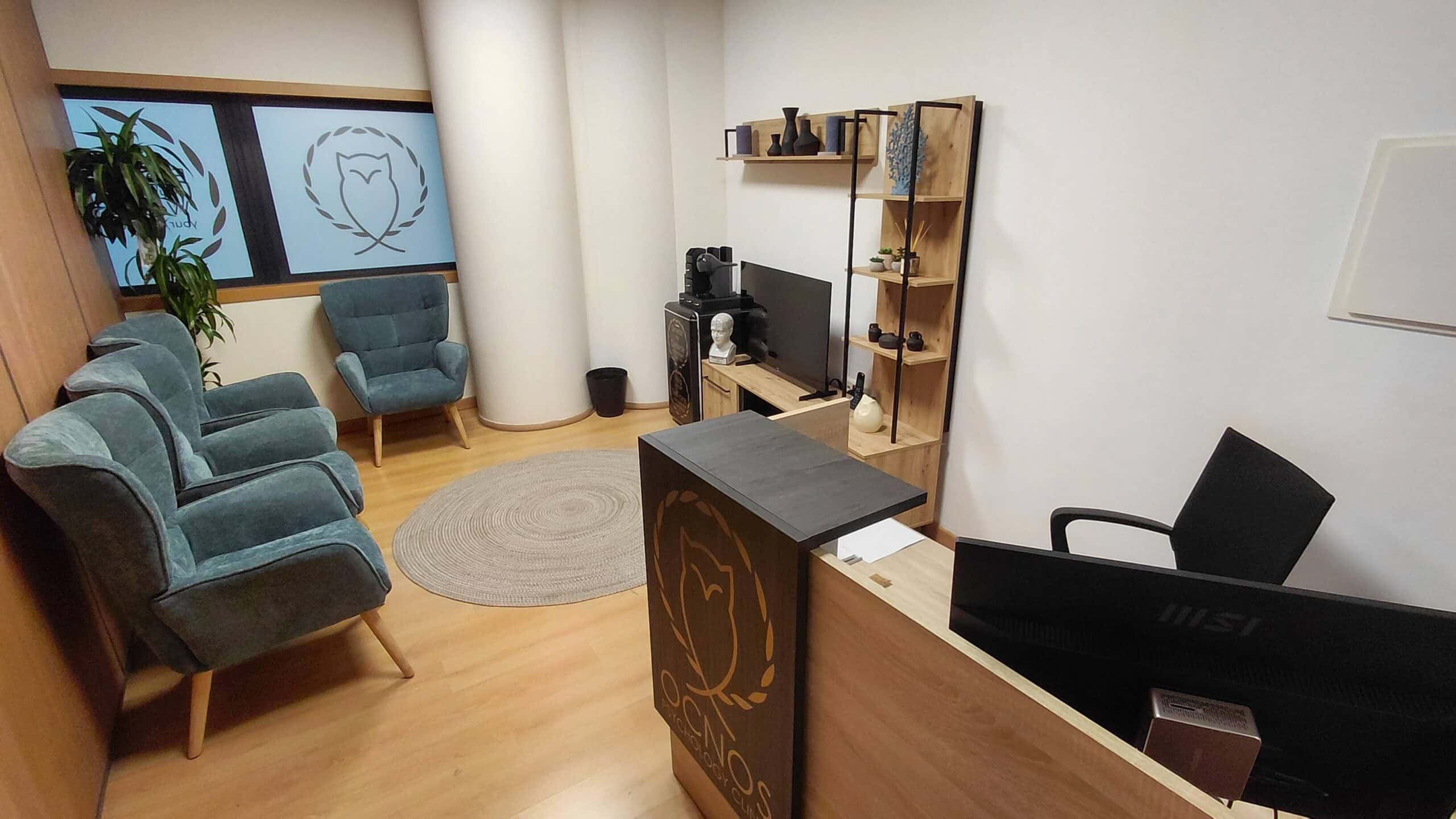
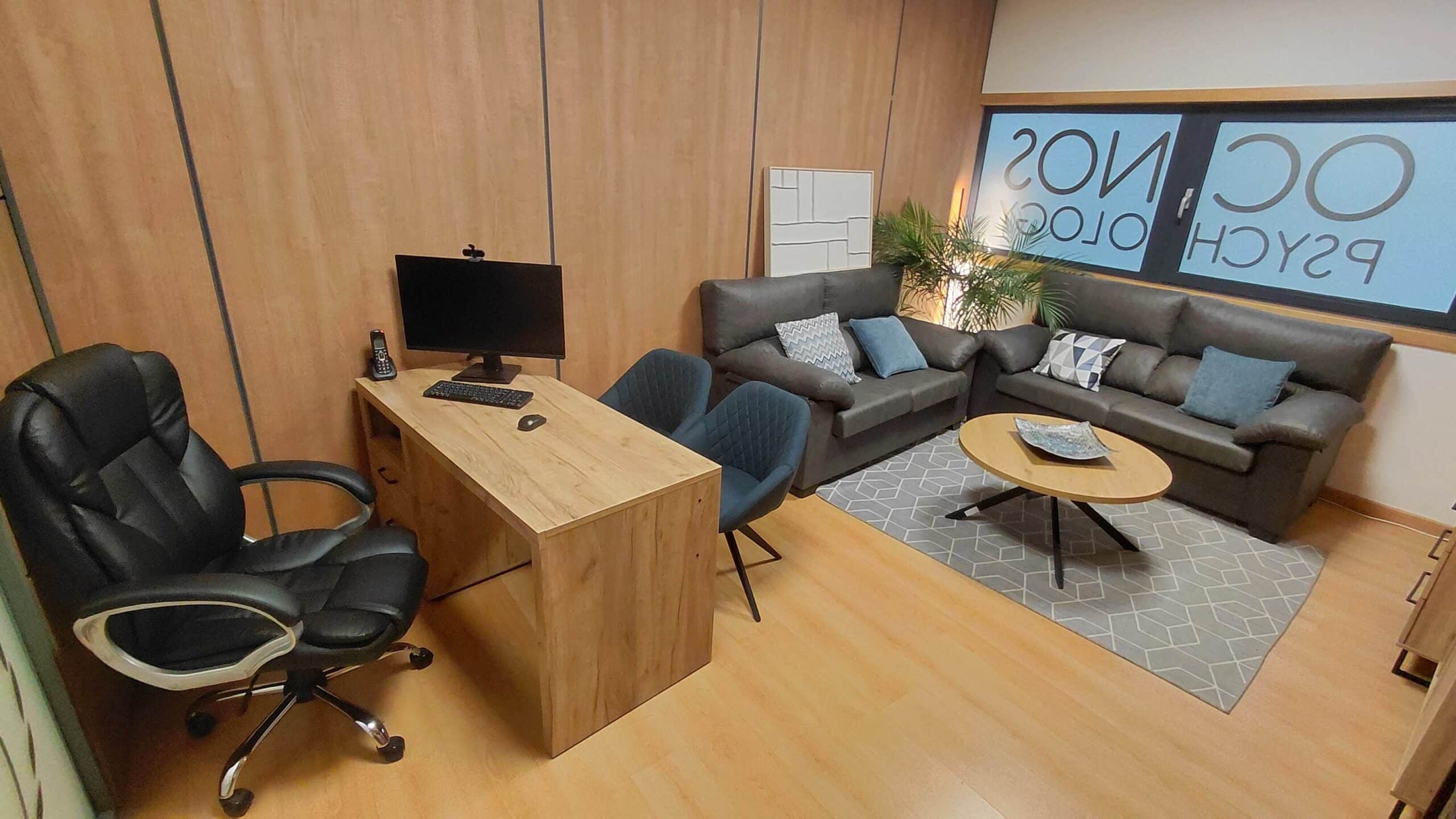
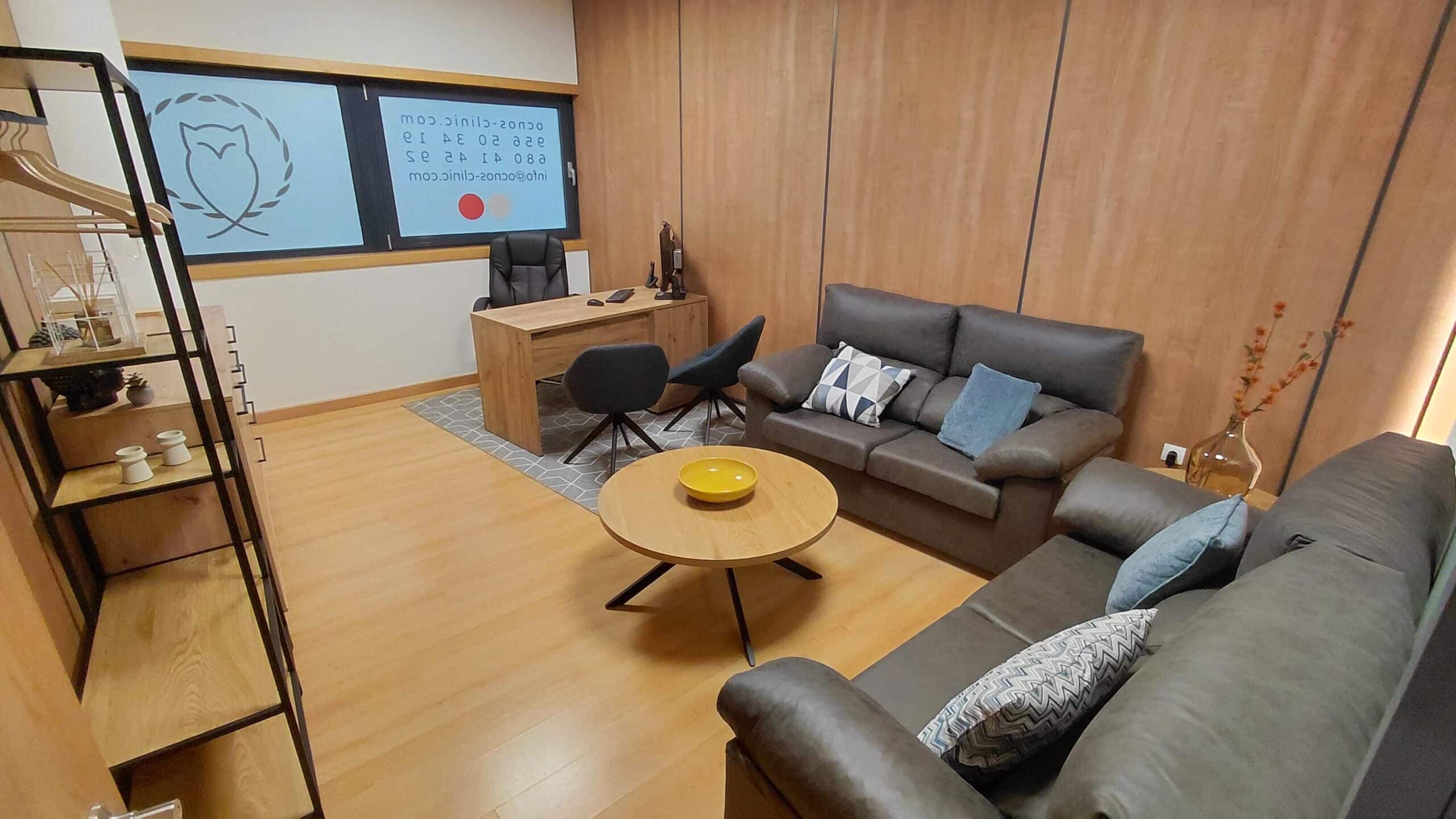
Ocnos Psychology Clinic is based in the Azabache Building in Palmones, with easy access from Los Barrios, Algeciras, La Línea de la Concepción, San Roque, Sotogrande and Gibraltar.
The clinic has been designed so that you can speak with calm, privacy and comfort. We know that starting affirmative therapy may bring up important experiences, which is why we care for both the physical setting and the clinical process.
- Private and comfortable consultation rooms.
- Face-to-face and online care.
- Registered health psychologists.
- Warm, respectful and confidential treatment.
Patient reviews
Ocnos Psychology Clinic reviews
Reviews help many people take the first step with more confidence. You can read real experiences from patients who have attended our clinic.


Frequently asked questions
FAQ about LGBTQ+ affirmative therapy
What is LGBTQ+ affirmative therapy?
It is a form of psychological support that validates affective, sexual and gender diversity without pathologising it. It can help with anxiety, self-esteem, relationships, minority stress, experiences of rejection, coming out and difficulties related to living one’s identity safely.
Is affirmative therapy only for LGBTQ+ people?
It is especially focused on LGBTQ+ people, but it can also be useful for family members, partners or close people who want to understand and provide better support from a respectful place. Each case is assessed individually.
Do I need to be sure about my identity before coming to therapy?
No. Many people come to therapy precisely when they are exploring, questioning or trying to find words for what they feel. Therapy does not force labels or decisions; it offers a safe space to understand yourself at your own pace.
Can it help if I feel anxious about hiding who I am?
Yes. Concealment, self-censorship or the expectation of rejection can create anxiety, emotional fatigue and constant tension. In therapy, we work on how this affects your life and what tools can help you live with more safety.
Can affirmative therapy help with coming out?
Yes. It can help you prepare important conversations, assess risks, identify support, regulate fear and decide how to communicate your reality in a way that is coherent with your values and circumstances.
Do you also work with LGBTQ+ couples?
Yes. When the reason for therapy is related to the relationship, communication, boundaries, intimacy or sexuality, couples work may be appropriate. Couples sessions last approximately 90 minutes and cost €110.
How much does affirmative therapy cost at Ocnos?
An individual affirmative therapy session costs €70 and lasts approximately 60 minutes. It can be held face-to-face in Palmones or online.
Can I have affirmative therapy online?
Yes. In addition to face-to-face sessions in Palmones, we offer online therapy for people who live further away, have complicated schedules or prefer to begin from a familiar and private environment.
What is the difference between affirmative therapy and “neutral” therapy?
Affirmative therapy does not only avoid judging diversity. It actively understands how stigma, rejection, discrimination or lack of safety can influence mental health. It does not reduce everything to identity, but it does not ignore context either.
Where is Ocnos Psychology Clinic?
We are in the Azabache Building, First Floor, Office 10, in Palmones, Cádiz. We support people from Palmones, Los Barrios, Algeciras, La Línea de la Concepción, San Roque, Sotogrande, Gibraltar and online.
Taking the first step
A space where you can stop explaining yourself and start understanding yourself
If you have spent a long time measuring what you say, hiding parts of yourself or worrying about how you will be received, perhaps you do not need to demand more from yourself. Perhaps you need a safe space where your story can be met with more respect, clarity and care.
Latest blogs and resources
Latest blogs and resources on affirmative therapy
At Ocnos Psychology Clinic, we publish articles and clinical resources on affirmative therapy, minority stress, LGBTQ+ emotional safety, relationships, sexuality, self-esteem and mental health for people who want to understand their experience with more clarity and care.

Transphobia and discrimination: what to do and where to get help in Spain
A practical map for responding after transphobia or discrimination: get safe, describe the facts, preserve useful information, choose the right support and reclaim space for the rest of your life.
Trans people at work: privacy, respect and workplace wellbeing
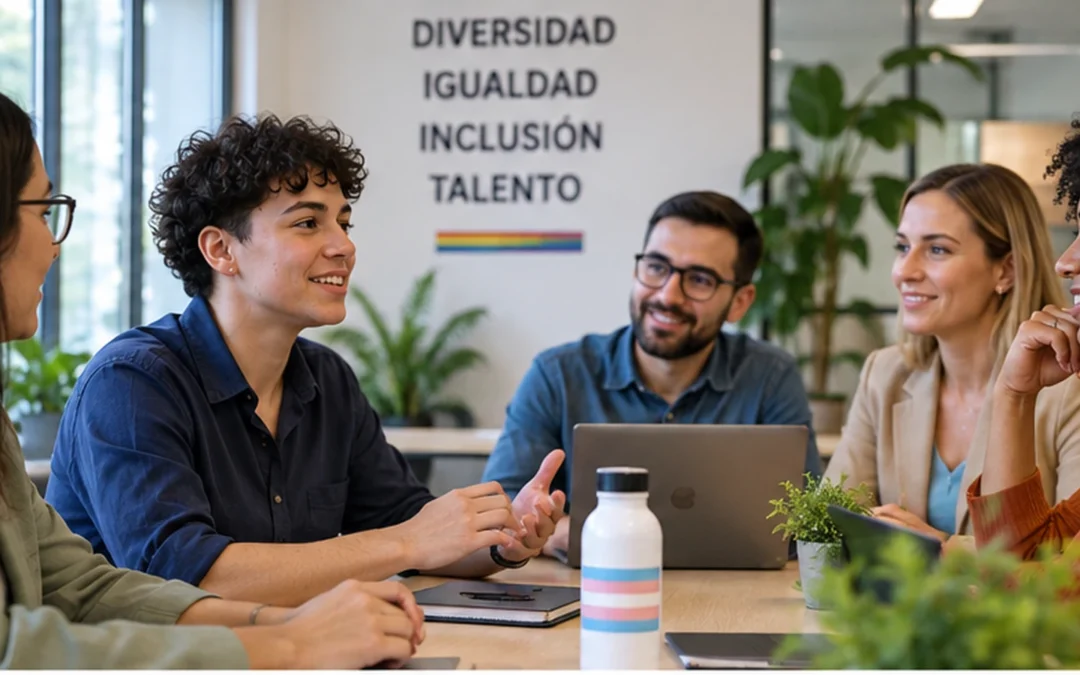
How to decide what to share at work, organise name and system changes, speak with HR and protect your wellbeing without making your identity the centre of your career.

Trans people from abroad in Spain: documents, residence, healthcare and support
A practical guide to understanding which authority controls each document when your passport, residence records and Spanish documents may belong to different systems.

Documents to update after a registered sex change in Spain: a practical guide
A priority-based guide to updating the systems you actually use after a registered change, without trying to change everything in one day or assuming every organisation synchronises in the same way.

Changing your name and registered sex in Spain: a guide for trans people
A practical, current guide to changing the registered sex marker and name in Spain, using official sources and separating the legal process from medical transition.

Hormones, surgery and fertility for trans people: making informed decisions without pressure
A guide to thinking through medical-transition decisions without assuming every trans person must use hormones, have surgery or preserve fertility, and without treating uncertainty as an identity test.

Trans healthcare for children and teenagers in Andalusia: support, decisions and common questions
A clinically grounded guide for trans or non-binary teenagers and their families on navigating Andalusian healthcare without treating information as a commitment to treatment or family uncertainty as an automatic veto.

Trans healthcare for adults in Andalusia: how it works and what to expect
A practical guide to navigating Andalusian public healthcare as a trans, non-binary or questioning adult without assuming you want hormones, surgery or one fixed pathway.

Transphobic bullying and cyberbullying: recognising it, staying safe and seeking help
A practical, clinically grounded guide to distinguishing mistakes, conflict, harassment, bullying, cyberbullying and threats, while protecting safety without blaming the person targeted.