

Obsessive–Compulsive Disorder (OCD) treatment in Palmones
Specialist psychological therapy for intrusive thoughts, compulsions, repeated checking, mental rituals, reassurance seeking and avoidance. At Ocnos Psychology Clinic, we help you understand the OCD cycle and work towards regaining freedom in your daily life.
Individual psychological therapy session: €70 · Duration: 60 minutes. In Palmones, near Algeciras, Sotogrande and Gibraltar.
OCD is not simply “having habits” or liking things to be tidy
OCD usually involves intrusive thoughts, images, impulses or doubts that feel unwanted and distressing, together with behaviours or mental acts aimed at reducing anxiety or gaining certainty.
The problem is not the thought itself. Many people have strange or unwanted thoughts from time to time. In OCD, the thought becomes hooked to fear, responsibility, guilt, disgust or uncertainty. The person then feels pushed to check, clean, repeat, avoid, analyse or seek reassurance.
These rituals may bring temporary relief, but that relief often reinforces the cycle. Over time, the person may need to check more, avoid more or think through the same doubt again and again.
OCD may be present when intrusive thoughts and compulsions take up time, cause distress or interfere with work, studies, sleep, relationships, family life or everyday routines.

The obsessive-compulsive cycle
Understanding the cycle is often the first step. OCD tends to maintain itself through a loop: obsession, anxiety, compulsion, brief relief and renewed doubt.
A thought, doubt, image or impulse appears unexpectedly.
The mind interprets it as dangerous, unacceptable or urgent.
The person checks, cleans, repeats, avoids, asks or analyses.
Anxiety drops for a while, so the ritual feels useful.
The brain asks for certainty again, and the loop restarts.
When repeated checking or reassurance starts to take over
Some compulsions are visible, such as checking a lock or washing repeatedly. Others are private, such as reviewing memories, counting silently, neutralising a thought, asking yourself whether you are a good person or searching online until you feel calm.
The key clinical question is not only what you do, but why you feel driven to do it, how much time it takes and what happens if you try not to do it.
- Repeated checking of doors, lights, appliances, messages or memories.
- Cleaning, washing or avoiding contact because of contamination fears.
- Repeated mental reviewing, counting, praying or neutralising.
- Seeking reassurance from family, partner, professionals or the internet.
- Avoiding places, objects, people or decisions because they trigger doubt.

OCD can appear in many different forms
Many people delay asking for help because their symptoms do not look like the classic idea of OCD. In reality, OCD can involve contamination, checking, order, morality, harm fears, relationships, sexuality, orientation, health anxiety-like doubts or mental rituals.
Contamination OCD
Fear of germs, illness, bodily fluids, chemicals or feeling “dirty”, often followed by washing, cleaning or avoidance.
Checking OCD
Repeated checking of locks, appliances, work, messages, memories or possible mistakes in search of certainty.
Harm OCD
Intrusive fears about causing harm, losing control or having done something dangerous, despite not wanting to do so.
Moral or religious OCD
Obsessions around guilt, sin, morality, being a good person or having done something unforgivable.
Sexual or orientation OCD
Repeated distressing doubts about desire, consent, identity, attraction or orientation. These doubts are treated without judgement.
Relationship OCD
Doubts about love, attraction, compatibility or whether the relationship is “right”, often followed by analysis and reassurance seeking.
Order and symmetry OCD
A strong need for exactness, balance, repetition or a “just right” feeling before being able to move on.
Mental compulsions
Silent rituals such as reviewing, counting, comparing, neutralising, praying or checking internal sensations.

How we work with OCD at Ocnos Psychology Clinic
Treatment starts by understanding your specific OCD pattern: what triggers the obsession, what you do to feel safe, what you avoid and how the problem interferes with your life.
1. Clinical assessment
We explore obsessions, compulsions, avoidance, distress, time spent and impact on daily life.
2. Functional analysis
We identify what activates the loop and what maintains it, including visible and mental rituals.
3. ERP / EPR work
Exposure and response prevention helps you face triggers gradually while reducing the ritual response.
4. Relapse prevention
We build strategies to notice early warning signs and keep applying what works in real life.
Therapy is gradual, collaborative and non-judgemental
Many people with OCD feel ashamed of their thoughts and worry that a psychologist will misunderstand them. In therapy, the aim is not to judge the content of the thought, but to understand the obsessive-compulsive process that keeps it alive.
You do not have to arrive knowing exactly what is happening. The first sessions help clarify whether the problem looks like OCD, anxiety, perfectionism, depression, trauma, health anxiety or another difficulty that needs a different focus.
Our goal is not to remove every intrusive thought. The goal is to help you reduce the power of the OCD cycle, regain flexibility and make decisions with less dependence on rituals or reassurance.
Individual OCD therapy session
Duration: 60 minutes.
Sessions may be face-to-face at our clinic in Palmones or online when clinically appropriate.
Registered health psychologists at Ocnos Psychology Clinic
Our team works from a clinically rigorous, human and evidence-informed perspective. We adapt therapy to each person, their history and their current needs.

Héctor Lozano Jiménez
General Health Psychologist · Director · COPAO AN 11777. Practical, clear and evidence-based therapeutic work.

Rocío Rodríguez Boza
General Health Psychologist · COPAO AN 13748. Integrative approach, trauma-informed work and emotional support.

María Ángeles Sanz Ruiz
General Health Psychologist · COPAO AN 12933. Relational, emotional and contextual approach to psychological care.
When OCD overlaps with anxiety, perfectionism or depression
OCD can appear alongside anxiety, low mood, guilt, shame, sleep difficulties or relational strain. Sometimes the first step is not to label the problem, but to understand the pattern carefully.
That is why we may also explore whether anxiety treatment, depression support, psychological assessment or online therapy is the best fit for your situation.
Not sure whether it is OCD?
We have also prepared a detailed article with an orientative self-assessment test to help you recognise possible OCD signs.
Ocnos Psychology Clinic in Palmones
We are based in Edificio Azabache, Office 10, in Palmones, Cádiz. We support people from Palmones, Los Barrios, Algeciras, La Línea de la Concepción, Sotogrande, Gibraltar and other areas of Campo de Gibraltar.
Our clinic offers a calm, private and professional environment for psychological therapy, with easy access and nearby parking.
Palmones · Los Barrios · Algeciras · La Línea · Sotogrande · Gibraltar
Reviews from people who have visited Ocnos
Reading other people’s experience can help reduce uncertainty before booking a first session.


Frequently asked questions about OCD treatment
How do I know if I need OCD treatment?
It may be helpful to ask for support if intrusive thoughts, checking, rituals, avoidance or reassurance seeking take up time, cause distress or interfere with work, studies, sleep, relationships or everyday life.
Is OCD the same as being tidy or perfectionistic?
No. Having preferences, routines or a high standard is not the same as OCD. OCD usually involves intrusive thoughts, anxiety, compulsions and a sense of being trapped in a cycle that is difficult to stop.
Can OCD involve mental rituals rather than visible behaviours?
Yes. Many people with OCD have mental compulsions such as reviewing memories, counting, neutralising, praying, comparing sensations or seeking certainty internally. These rituals may not be visible from the outside.
Can intrusive thoughts be treated without judging their content?
Yes. In therapy, intrusive thoughts are explored in a confidential and non-judgemental way. The aim is not to judge the content, but to understand the cycle of fear, doubt, ritual and relief that maintains the problem.
What is exposure and response prevention?
Exposure and response prevention involves gradually and carefully approaching situations that trigger obsessions while reducing the compulsion that was previously used to lower anxiety. It is planned collaboratively and adapted to the person.
How long does an individual OCD therapy session last?
At Ocnos Psychology Clinic, individual psychological therapy sessions last 60 minutes. The price for an individual psychological therapy session is €70.
Can OCD treatment be done online?
Yes. In some cases, OCD treatment can be carried out online, provided the format is clinically appropriate for the person’s situation. We also offer face-to-face sessions at our clinic in Palmones.
Where is Ocnos Psychology Clinic?
Ocnos Psychology Clinic is located in Edificio Azabache, Office 10, in Palmones, Cádiz. We support people from Palmones, Los Barrios, Algeciras, La Línea de la Concepción, Sotogrande, Gibraltar and other areas of Campo de Gibraltar.
Start working on OCD with professional support
You do not need to have everything clear before asking for help. We can assess your case, explain what may be maintaining the problem and support you in a gradual treatment process to regain freedom from obsessions and compulsions.
Latest blogs and resources from Ocnos
At Ocnos Psychology Clinic, we publish resources on psychological assessment, anxiety, intrusive thoughts, therapy and mental health to help people understand when to ask for support and how to begin a therapeutic process.
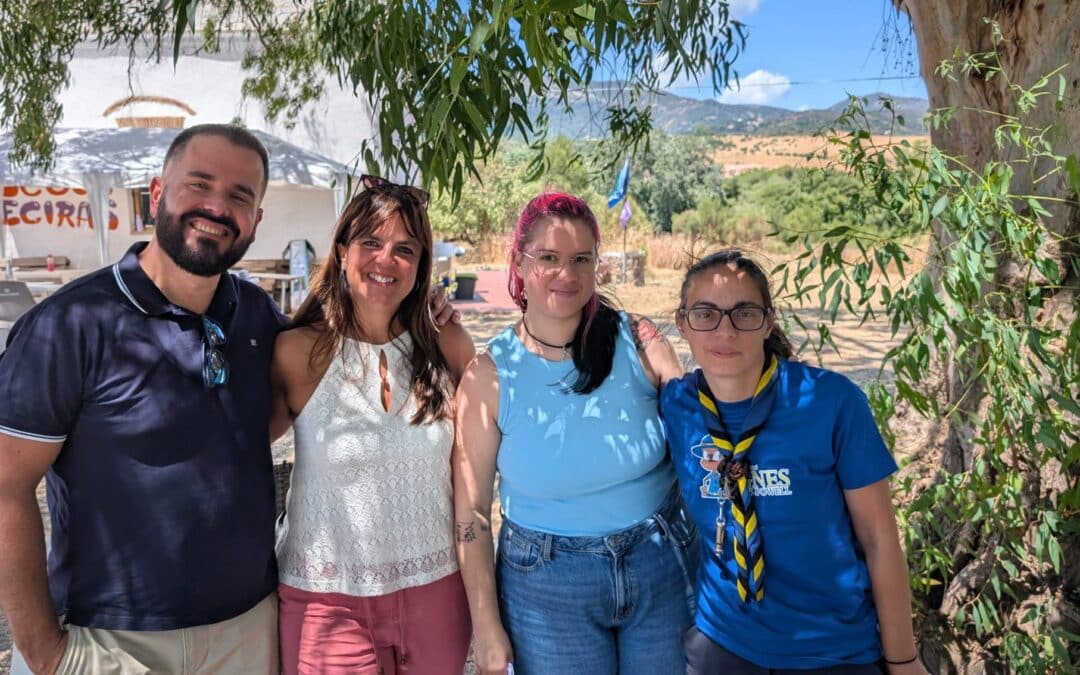
Ocnos offers practical guidance to Agnes Baden-Powell Scout families
On Sunday 12 July 2026, Ocnos Psychology Clinic held a practical session for families and volunteers from the Agnes Baden-Powell Scout Group. Héctor Lozano, Rocío Rodríguez and María Ángeles Sanz discussed how to observe children’s behaviour, support their emotions and recognise when professional guidance may be helpful.

Online anxiety test: GAD-7 questionnaire
Complete the GAD-7 online anxiety test for an immediate and private indication of symptoms experienced over the past two weeks. The result is anonymous, is not stored and does not replace a professional psychological assessment.

Alcohol Problems: Signs, Practical Exercises and a Self-Check to Know When to Ask for Help
Alcohol problems do not always mean drinking every day. In this guide, Héctor Lozano explains warning signs, practical exercises and an orientative self-check to help you understand your relationship with alcohol and know when to ask for psychological help.

My teenage daughter is cutting herself: a parent’s guide to self-harm
Finding out that your teenage daughter is cutting herself can be frightening. This guide explains what to do in the first 24 hours, what to avoid, how to talk, how to reduce risk, and when to seek professional help.
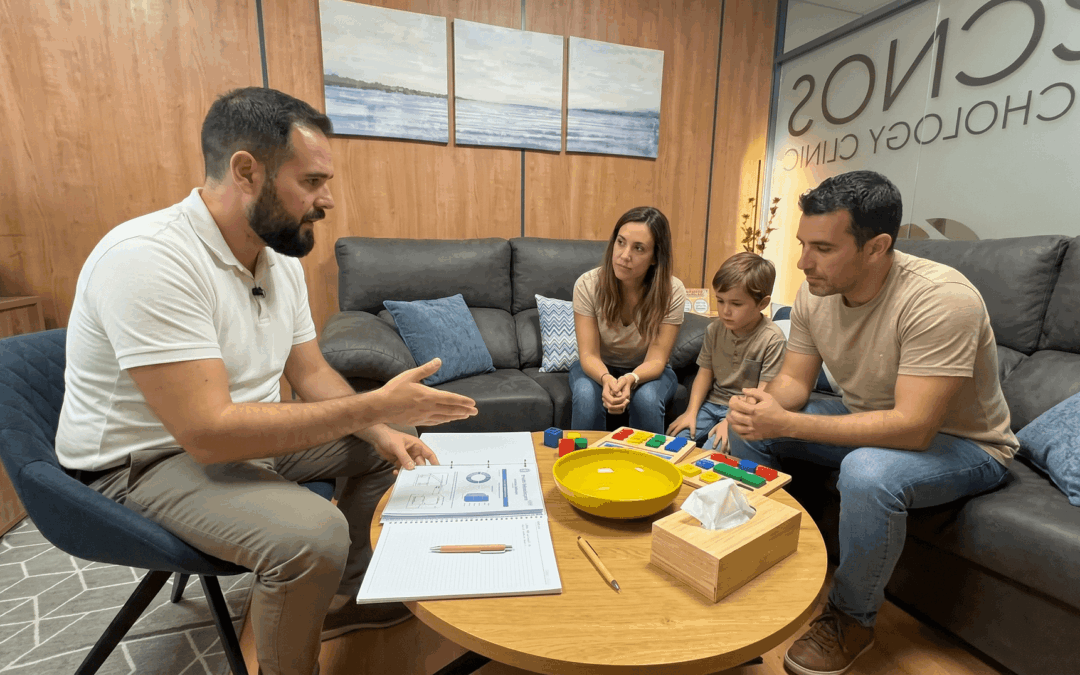
Indicative high-ability test: O-SIAC for children, teenagers and adults
O-SIAC is Ocnos Psychology Clinic’s indicative screening for exploring high-ability indicators across age groups. It does not diagnose giftedness or measure IQ, but it can help organise observations and decide whether a professional assessment may be useful.

Night terrors in young children: what to do and when to worry
Night terrors in young children can be frightening for families, even though the child often remembers nothing the next morning. María de los Ángeles Sanz Ruiz explains what they are, what to do during an episode, when to seek help and how they can be understood from a child psychology perspective.
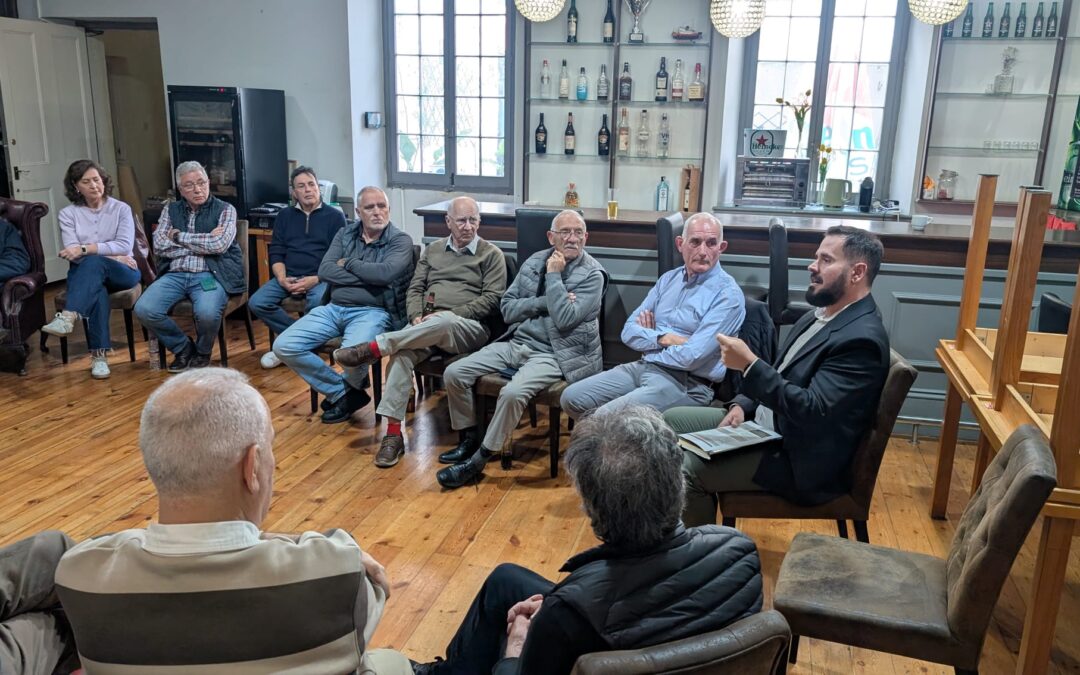
Ocnos Psychology Clinic at Prostate Cancer Gibraltar: Héctor Lozano discusses the emotional impact of prostate cancer
Héctor Lozano, Director of Ocnos Psychology Clinic, took part in a Prostate Cancer Gibraltar Buddies Meeting to discuss the emotional impact of prostate cancer, including uncertainty, fear, relationships, intimacy and psychological support.

Do I Have ADHD as an Adult? Signs, Symptoms and an Informative Self-Test
Many adults live for years with distractibility, procrastination, mental restlessness or organisational difficulties without knowing what may be behind it. In this guide, we explain the most common signs of ADHD in adults and include an informative self-test, always from a clinical perspective and without replacing a professional assessment.

What to Do When Your Mind Won’t Switch Off at Night: Causes, Habits That Keep It Going and What Really Helps
What to Do When Your Mind Won’t Switch Off at Night

Depression symptoms self-check
An indicative depression symptoms self-check with an immediate result, clear explanation and a clinically responsible approach. A useful first step in deciding whether to seek psychological support.

Psychological Trauma: How It’s Assessed and Treated in Therapy
Psychological trauma is not only about what happened, but about the impact it left behind. It can affect the nervous system, emotions, relationships and sense of self, sometimes long after the original experience has passed. In this article, Rocío Rodríguez Boza, Registered Health Psychologist (COPAO AN 13748), explains what psychological trauma is, how it develops, common symptoms, and how trauma therapy works from an integrative, evidence-based perspective. You will also learn what to expect in the first sessions and when it may be time to seek support. If you live in Campo de Gibraltar or prefer online therapy, this guide offers a clear and compassionate understanding of trauma and recovery.

Dyslexia in Campo de Gibraltar: what it is, diagnosis and treatment
Dyslexia is a neurodevelopmental condition that affects reading and writing, but not intelligence. In this article, we explain how to recognise the signs at different ages, its emotional impact, how it is assessed, and what evaluation and intervention options are available in Campo de Gibraltar for children, adolescents and adults.