
Complete the GAD-7 online anxiety test for an immediate and private indication of symptoms experienced over the past two weeks. The result is anonymous, is not stored and does not replace a professional psychological assessment.


In this Ocnos Psychology Clinic blog category, we bring together content on anxiety written from a clinical, accessible and responsible perspective. Here you will find articles to help you understand how anxiety appears, which signs are worth taking seriously, when it starts interfering with daily life and what kind of psychological support may be helpful.
We will continue publishing resources on anxiety in adults, night-time anxiety, difficulty sleeping, work-related anxiety, hypervigilance, emotional blocks, constant worry, physical symptoms, avoidance, anxiety in relationships and anxiety in sexuality.
The aim of this category: to offer reliable, in-depth content for people living with anxiety, relatives who want to better understand it and readers looking for serious, useful and human psychological guidance.
We publish articles that answer real questions many people ask before starting therapy: what anxiety is, how it differs from temporary stress, which symptoms commonly appear, why it sometimes shows up in the body, how it affects sleep, work, social life or sexuality, and when it may be worth considering professional help.
You will also find content on specific experiences related to anxiety, such as a constant sense of alertness, mental rumination, emotional blocks, difficulty switching off, fear of losing control, work-related anxiety and the impact of certain relational contexts on psychological distress.
This category also links to other Ocnos resources, such as our anxiety treatment, online therapy, depression treatment and related articles when anxiety appears connected with relationships, sexuality or emotional exhaustion.
Important: anxiety can express itself in many ways and it does not look the same in everyone. Reading about it can help you understand what may be happening, but it does not replace an individual assessment. If distress continues or limits your daily life, asking for psychological help can be an important step.
The Ocnos blog is written and reviewed by professionals from the clinic. Our aim is to share careful information that helps people understand their experience without self-diagnosing or replacing an individual assessment.



Anxiety does not always appear as a panic attack. Sometimes it looks like overthinking, tension, irritability, difficulty sleeping, fear of making mistakes, avoiding conversations, feeling blocked or living with the body constantly on alert.
In therapy, we explore how anxiety works in your specific case: what triggers it, what keeps it going, what you do to cope and what changes may help you live with more flexibility and less fear.
A useful starting point: instead of asking “how do I eliminate anxiety?”, therapy often begins by understanding what your anxiety is trying to protect you from and how that protection may have become exhausting.


This category will continue to grow with new articles and resources from Ocnos Psychology Clinic, answering frequent questions about anxiety in a rigorous, useful and natural way. If you need professional support, you can also take the first step towards an initial assessment.
Ocnos Psychology Clinic offers psychological care in Palmones, near Gibraltar and Sotogrande, with professional support for anxiety, depression, OCD, trauma, couples therapy, sexuality, affirmative therapy and psychological assessment.

Complete the GAD-7 online anxiety test for an immediate and private indication of symptoms experienced over the past two weeks. The result is anonymous, is not stored and does not replace a professional psychological assessment.

A practical UK English guide with exercises for premature ejaculation, including breathing, pelvic floor training, start-stop, mindfulness and psychological strategies to reduce pressure and improve control.

Mindfulness is a psychological tool that helps you observe thoughts, emotions and body sensations with more awareness and less automatic reaction. In this article, Héctor Lozano Jiménez explains what mindfulness is, what it is not, how it can help with anxiety, stress and emotional regulation, and offers safe beginner-friendly exercises.

Alcohol problems do not always mean drinking every day. In this guide, Héctor Lozano explains warning signs, practical exercises and an orientative self-check to help you understand your relationship with alcohol and know when to ask for psychological help.

Finding out that your teenage daughter is cutting herself can be frightening. This guide explains what to do in the first 24 hours, what to avoid, how to talk, how to reduce risk, and when to seek professional help.

A clear, compassionate guide to how psychological therapy can help with obesity by working on emotional eating, cravings, body shame, sustainable habits and relapse prevention. Includes a practical downloadable workbook to help you start step by step, without guilt.

Feeling empty inside does not necessarily mean that your life is wrong. Sometimes it is a sign of emotional disconnection, long-term exhaustion or a way of living that has been too focused on coping and not enough on feeling.

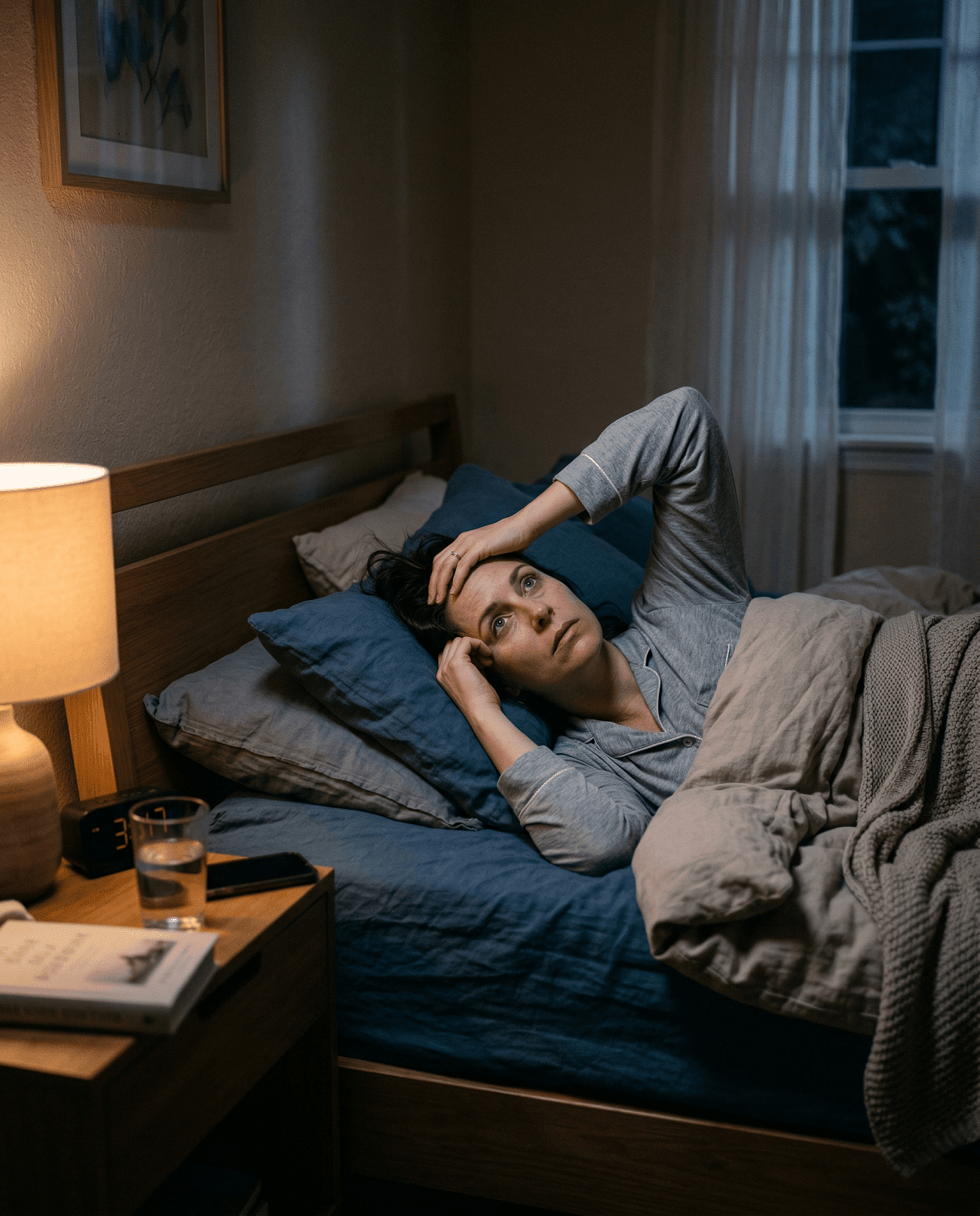
What to Do When Your Mind Won’t Switch Off at Night

A toxic work environment does not always look obvious at first. Sometimes it starts with criticism, pressure, shifting expectations and the feeling that whatever you do is never enough. In this article, María de los Ángeles Sanz Ruiz explains why this can make you doubt yourself, which signs to look out for, and how to start protecting yourself without blaming yourself.

Psychological trauma is not only about what happened, but about the impact it left behind. It can affect the nervous system, emotions, relationships and sense of self, sometimes long after the original experience has passed. In this article, Rocío Rodríguez Boza, Registered Health Psychologist (COPAO AN 13748), explains what psychological trauma is, how it develops, common symptoms, and how trauma therapy works from an integrative, evidence-based perspective. You will also learn what to expect in the first sessions and when it may be time to seek support. If you live in Campo de Gibraltar or prefer online therapy, this guide offers a clear and compassionate understanding of trauma and recovery.

Picture a scene that may feel painfully familiar. It is late, the day has been long, and you have been chaining tasks together: work, responsibilities, dozens of small and big decisions. At last the house is quiet. You sit down. For the first time in hours, you are not responding to anyone.
And then a thought shows up: “I could eat something.” It is not quite physical hunger. It is more that, just by imagining food, something inside loosens. As if eating marked the end of the day — permission to stop holding everything up.

There is a very specific moment, almost to the millimetre, when something inside you whispers, “maybe I need help.” It is not a shout, not an absolute certainty. It is more of an uncomfortable suspicion that appears after many sleepless nights, repeated arguments, and a kind of tiredness that no holiday seems to fix. And just as that voice begins to grow louder, another one appears — louder still — saying, “it’s not that bad,” “it will pass,” “going to therapy is an overreaction.”